What Is a Proportional Valve? Inside the Valves and Why They Need Repair | NC Servo Technology
NC Servo Technology - Westland, Michigan 734-326-6666

Educational Reading. Independent Repair Shop.

What Is a Proportional Valve?

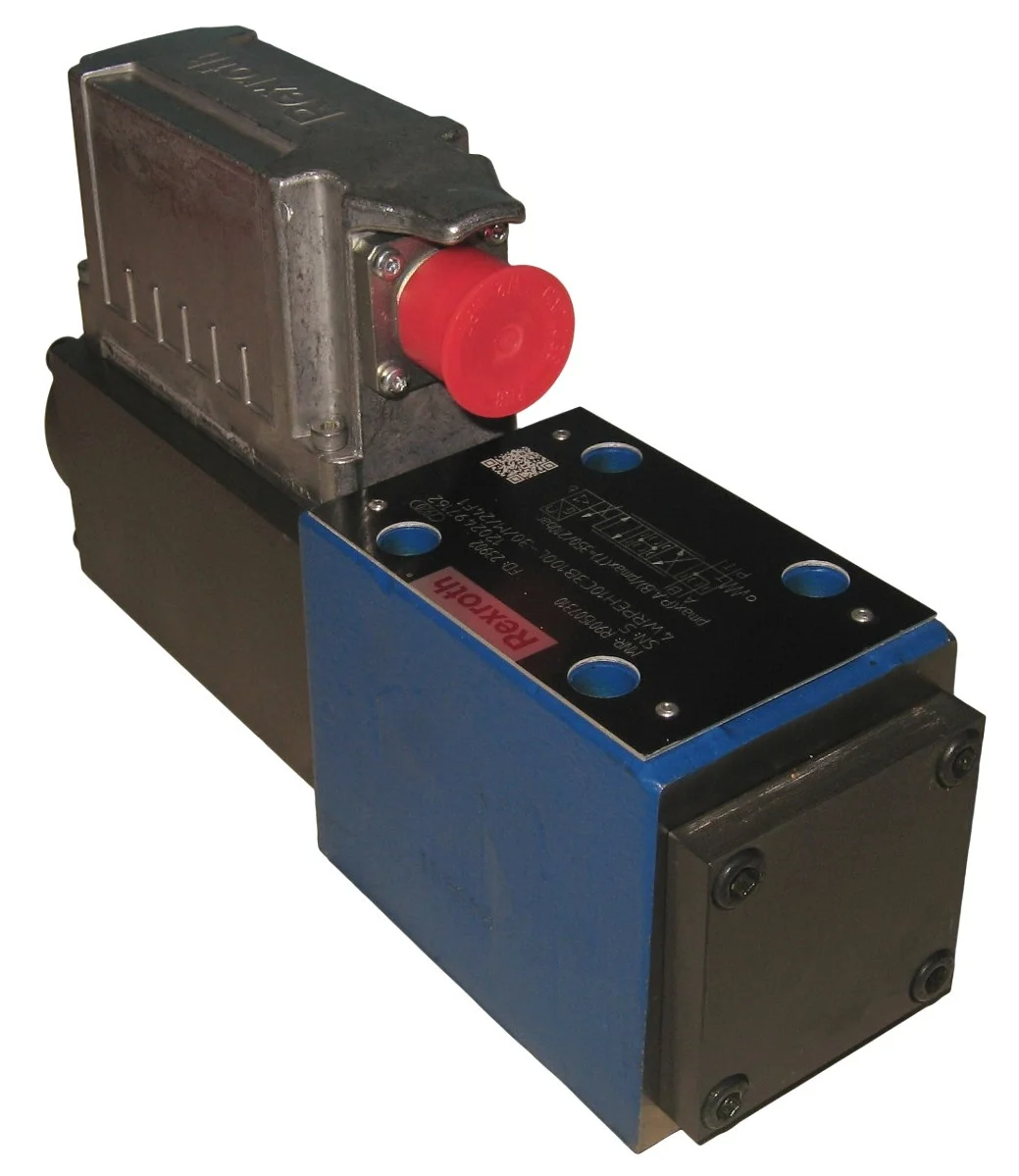
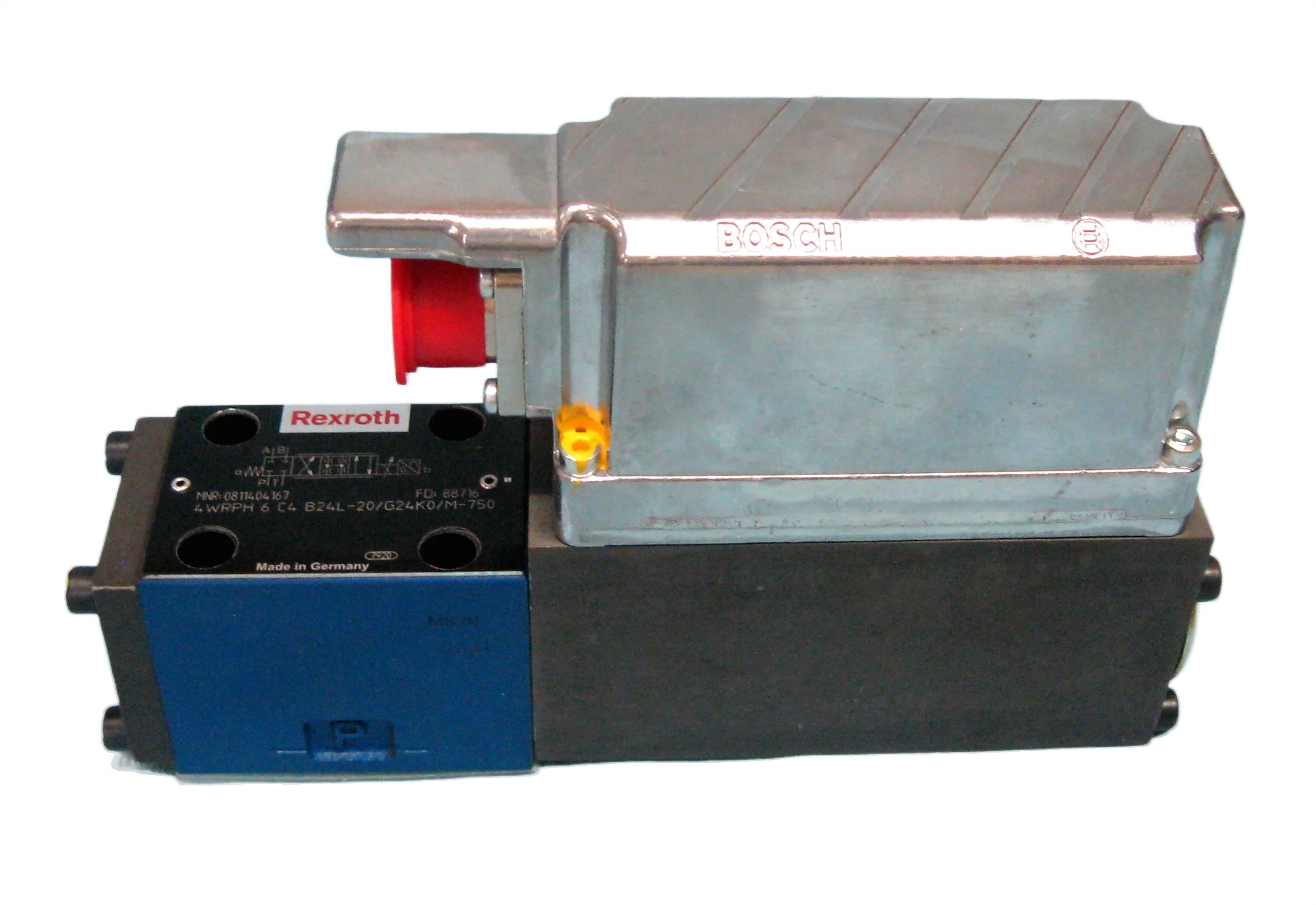
A proportional valve is a hydraulic valve where a coil-driven solenoid pushes the spool directly in proportion to the input current. Higher flow than a servo valve, lower bandwidth, and more tolerant of dirtier oil. Many include a position sensor (LVDT) on the spool, which closes the loop and turns the unit into a servoproportional. The valve shown here is a Bosch Rexroth 4WRPEH, one of the more common servoproportionals we see on the bench.

Since 1975Working on this hardware
13 test standsFor verification
1-year warrantyParts and workmanship
Bosch Rexroth 4WRPEH servoproportional valve in for service at NC Servo Technology
Bosch Rexroth 4WRPEH servoproportional valve. In for service at NC Servo.

What It Is

A solenoid-driven hydraulic valve, in two main forms

Proportional valves come in two main forms: standard proportional (open-loop) and servoproportional (closed-loop with spool-position feedback). Most of what comes through the bench is one or the other, and the bench work overlaps but is not identical.

Standard proportional is the simpler pattern. A pair of large coils on each end of the spool produces a magnetic force that pushes the spool against centering springs. The spool position is roughly proportional to the input current. There is no internal position feedback; if the spool is fighting a load, the position can drift. Bandwidth is modest (often under 50 Hz), but flow capacity is higher than a servo valve and the tolerance for dirty oil is better. Atos DHZO, Atos DKZOR (without transducer), Bosch Rexroth 4WRA, and Yuken EFBG fall into this group.

Servoproportional adds an LVDT (linear variable differential transformer) that measures actual spool position and feeds it back to onboard or external electronics. The drive electronics adjust coil current continuously to push the spool to the commanded position, even under load. Bandwidth is higher than a standard proportional, deadband is smaller, and accuracy is better. Atos DLHZO, Atos DLKZOR, Bosch Rexroth 4WRPH, 4WRPEH, and 4WREE, Yuken EHFBG, and Duplomatic DXE fall into this group.

Both share the same skeleton: a body bore with a spool inside, two solenoid coils on each end, centering springs, four hydraulic ports, and (on servoproportional variants) an LVDT and either an external driver card or onboard electronics (OBE). The differences are in the feedback loop and the accuracy of the spool fit. Bench work overlaps a lot. A burned coil is a burned coil. A worn spool is a worn spool. The differences show up in the LVDT and OBE channels on servoproportionals (which do not exist on the standard variants).

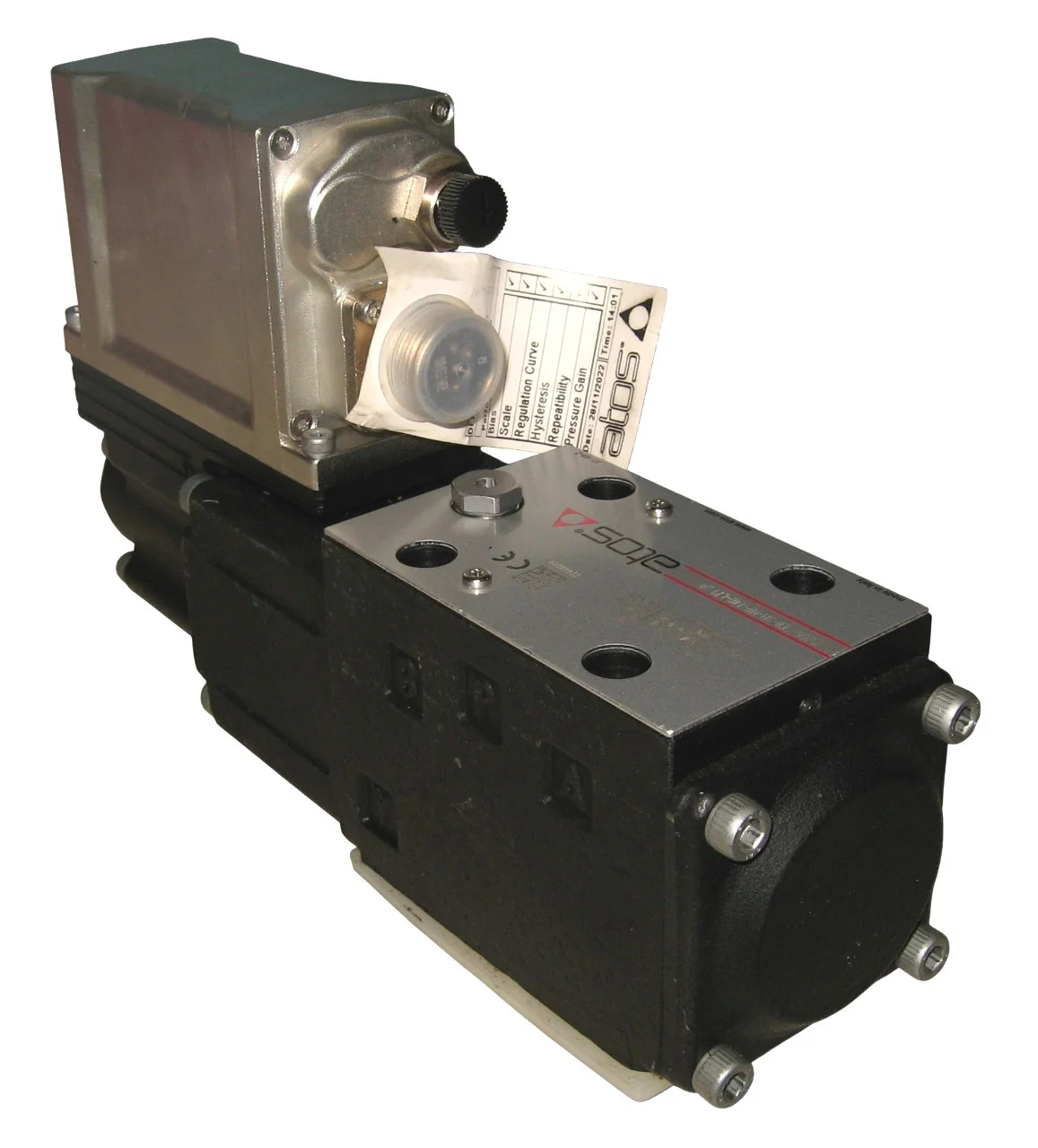
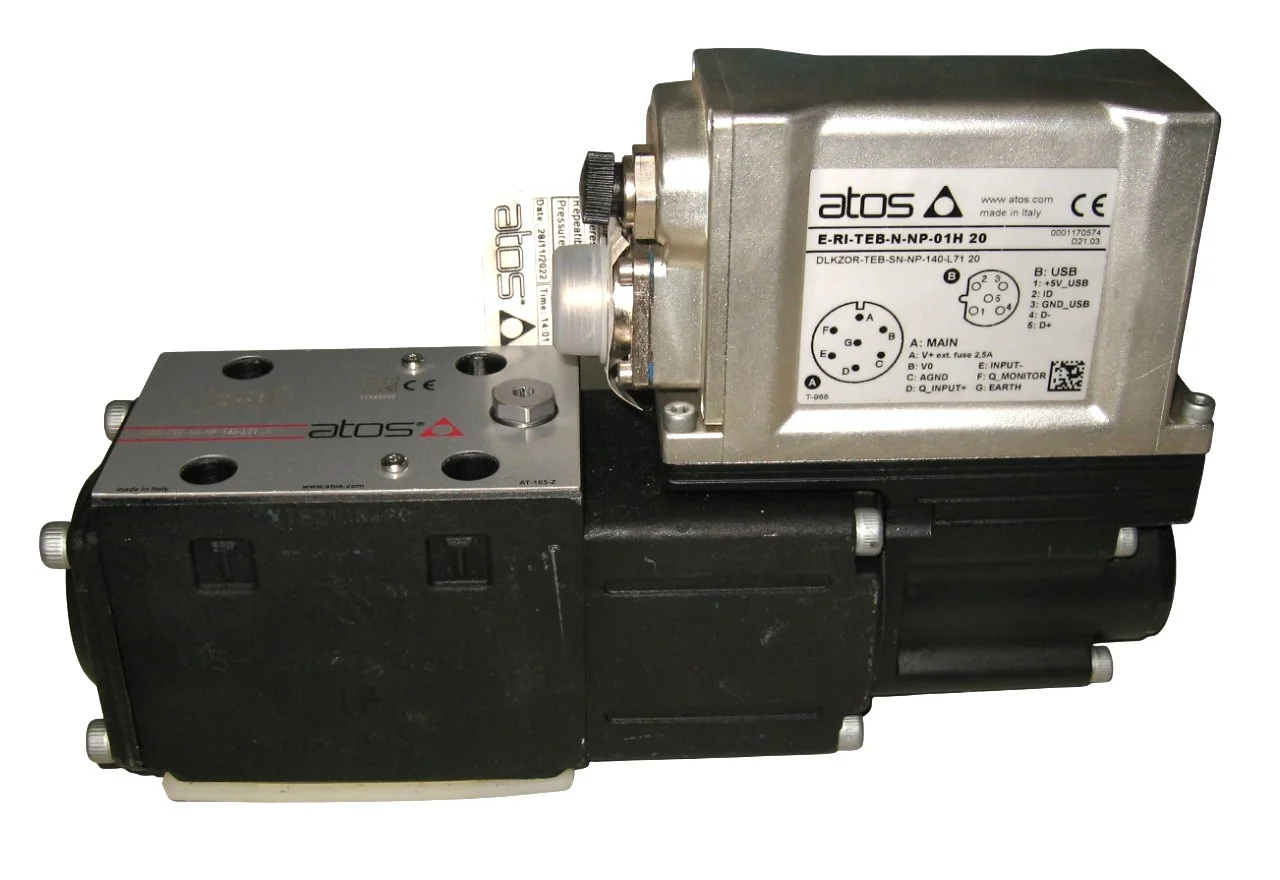
Atos DLKZOR servoproportional directional valve in for service at NC Servo Technology
An Atos DLKZOR servoproportional. Direct-operated, with onboard LVDT feedback and integrated electronics.

At the Bench

What we see when one lands on the bench

The first move is the same regardless of brand: open the unit, look at the coils, look at the spool, look at the body. On servoproportional variants, the LVDT and onboard electronics also get a careful inspection. Three groups cover most of what comes in.

Coil and connector failures

The most common one. Big proportional coils carry more current than servo valve pilot coils, and when they burn they often burn dramatically. Symptoms: unit will not respond to current, blown fuses, smell of burned varnish, sometimes visible discoloration on the coil housing. Connector pins corrode over time, especially on units with onboard electronics that sit out in the weather. Bench work: coil testing, replacement or rewinding, connector cleaning, sometimes pulling a known-good coil pair off a donor unit.

Spool wear and contamination

The body bore and spool fit are tight, but not as tight as servo valves. Particles in the oil score the bore over time, especially on units that have run for years on systems that crossed their cleanliness specs. Symptoms: hysteresis grows, response slows, deadband widens, the unit drifts off zero. Bench work: hone the bore back into spec, replace seals, fit a matched spool from inventory, run on the test stand to verify flow and response.

OBE / LVDT failures (servoproportional)

Servoproportionals add a position sensor and a driver card. Either can fail. LVDT failures show up as drift, no response to small commands, or fault codes on the controller side. OBE board failures often look like the unit will not enable, or it enables briefly and then trips offline. Bench work: signal-trace the LVDT, check OBE supply rails, look at the gain and null trim potentiometers, sometimes swap an OBE board off a donor unit. OBE damage from voltage spikes is common on machines without surge protection.

Last step on every valve, regardless of what came in: the unit goes on a test stand, runs through the rated current range, and gets verified for null position, flow gain, hysteresis, and step response. On servoproportionals, the LVDT feedback gets verified against actual spool position with a dial indicator. If the unit does not hit spec, it goes back to the bench.

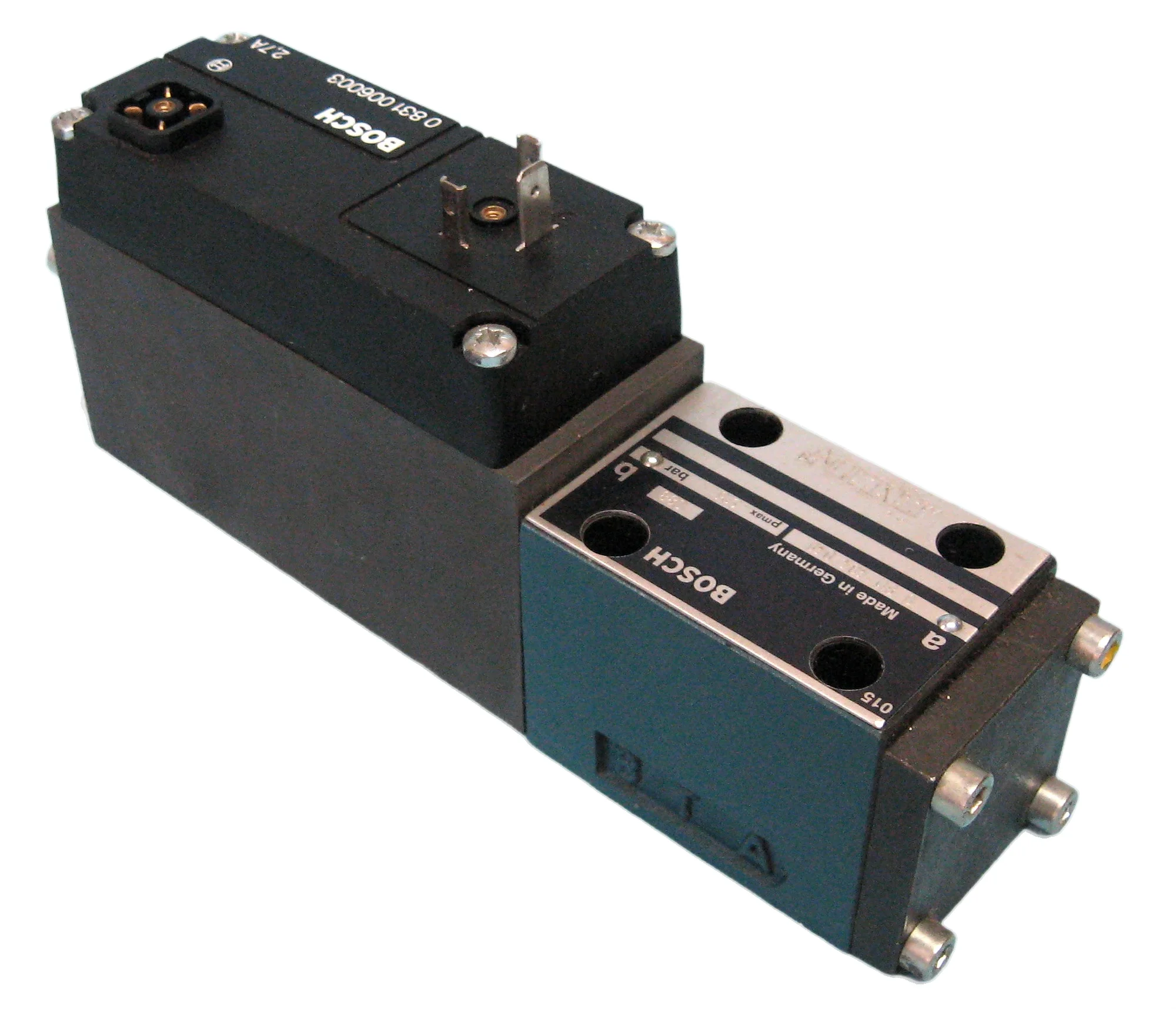
Bosch 0811404046 proportional valve assembly in for service at NC Servo Technology
A Bosch 0811-series proportional valve. The 0811 line shows up regularly on older European-built machines.

How to Identify One

How to know if you have a proportional valve

Three ways to figure out what is in your hand: read the nameplate, recognize the architecture, or trace it from the machine. Most of the time the nameplate is the fastest answer.

1. Read the nameplate.

Every proportional valve has a label or stamped plate with brand and model. Brand and model are usually all anyone needs. Brand tells you what spool architecture, electronics, and connector layout to expect. Model tells you flow class, port size, signal range, and whether there is integrated OBE.

Some European brands (Atos, Yuken) print model and date codes in formats that can confuse someone unfamiliar with the convention. If the number looks borderline, send a photo of the nameplate. NC Servo can usually identify the valve from the model alone.

2. Recognize the architecture.

A proportional valve typically has a larger body than a servo valve, with one or two big coils on the ends pushing the spool directly. There is no separate small pilot stage on top. On servoproportionals, you will see an LVDT housing protruding from one end (usually a small metal cylinder threaded into the spool body) and often onboard electronics in a sealed enclosure on top of the valve. Cable connectors are typically larger than servo valve connectors and often include separate paths for power, command, and feedback.

If the unit has a small two-stage architecture with a torque motor or jet pipe pilot stage on top, you have a servo valve, not a proportional. If the unit has a single small solenoid and works as on/off rather than proportional, you have a directional control valve.

3. Trace it from the machine.

If the valve is still installed and the part number is unreadable, the machine type narrows down what to expect. Proportional and servoproportional valves are common on injection molding (clamp force, screw position), large hydraulic presses, mobile equipment (excavators, cranes, forklifts), web tension control, mixers, descalers, and other heavy positioning circuits. Servo valves dominate in flight controls, machine tool axes that need very high bandwidth, and motion simulators.

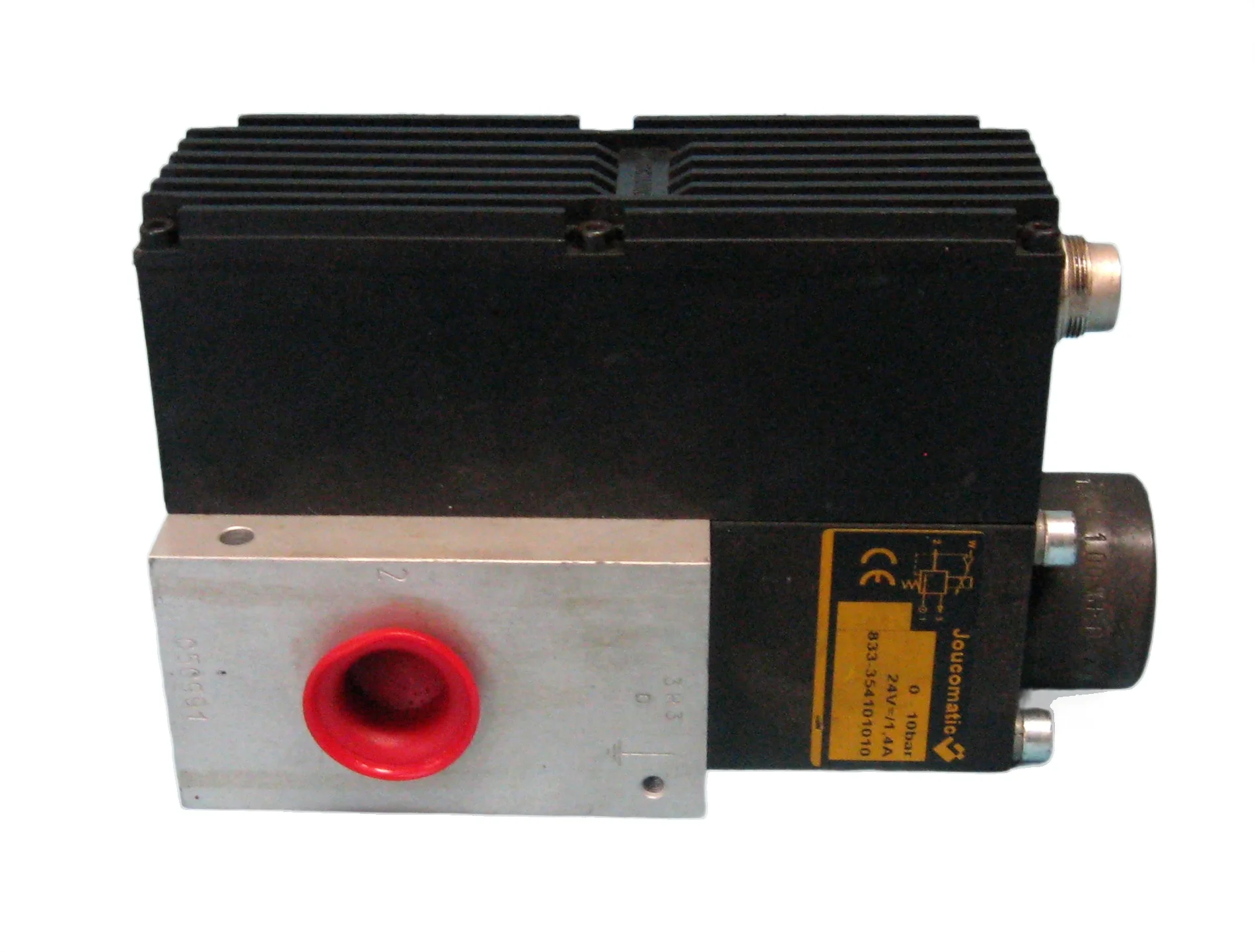
Joucomatic 833 series hydraulic valve in for service at NC Servo Technology
A Joucomatic 833 series valve. Smaller-brand European hydraulics still come through regularly.
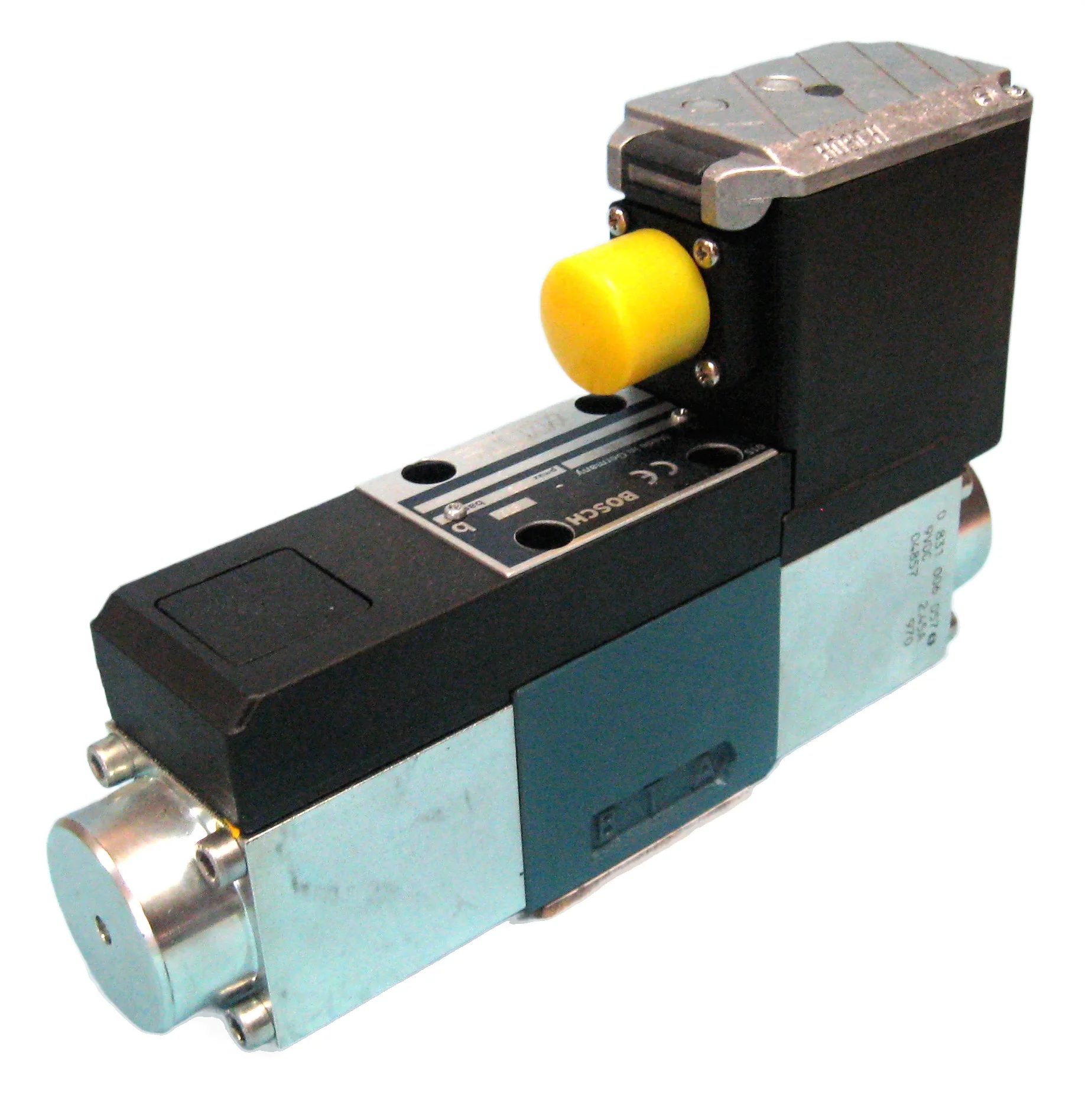
Bosch 0811404154 proportional valve with yellow actuator at NC Servo Technology
A Bosch 0811-series unit with manual override knob. Different family, different shape; the bench work overlaps with what is described to the left.

Major Families We See

The proportional valve brands that come through the bench

Each brand has its own quirks, layouts, and failure patterns. The notes below are based on what comes through NC Servo's shop, not factory documentation. Send the nameplate info if you are not sure what you have.

Rexroth 0811404167 proportional valve at NC Servo Technology
A Rexroth 0811-series proportional. The 0811 family runs through European-built machines from the 1980s onward.
Atos DLKZOR servoproportional valve angled view at NC Servo Technology
An Atos DLKZOR from a different angle. The Atos line is one of the most common servoproportionals on injection molding.
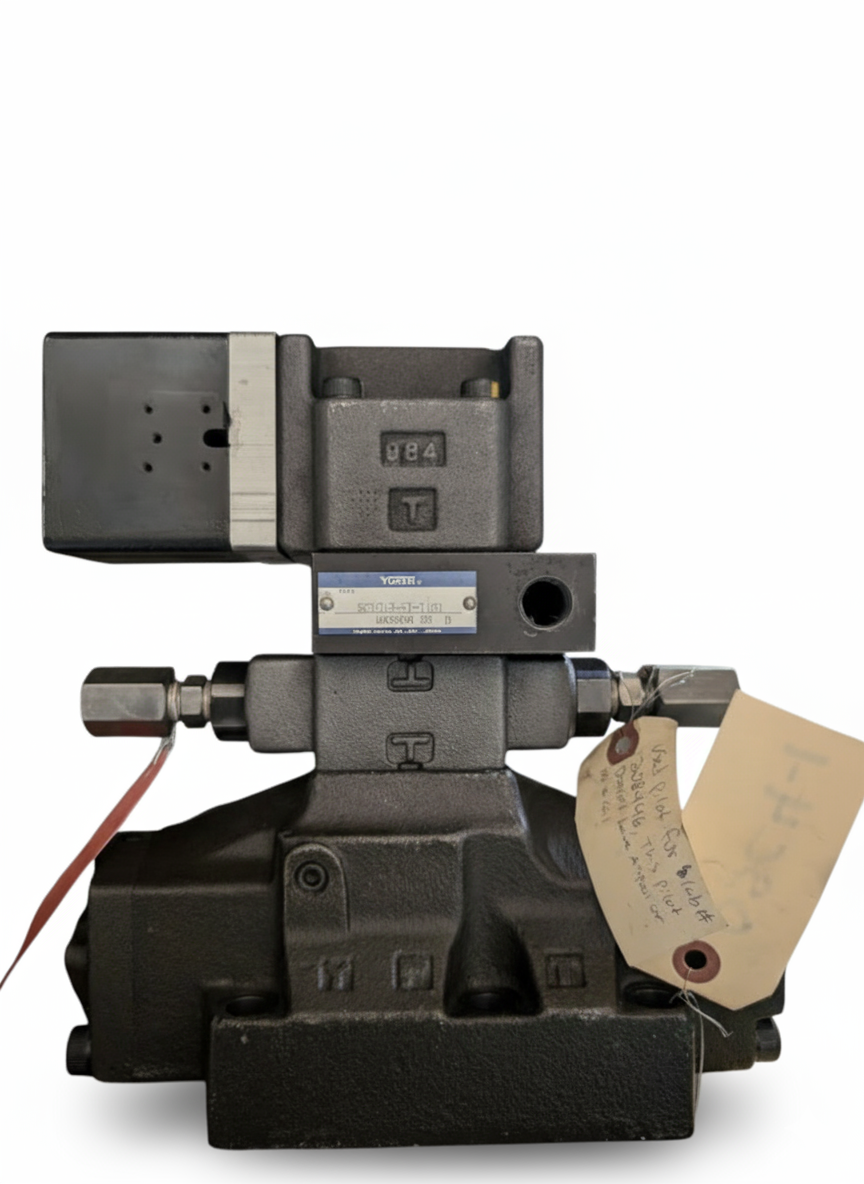
Yuken hydraulic valve in for service at NC Servo Technology
A Yuken hydraulic valve. Yuken EHFBG and EFBG units come in regularly from Japanese-built and Asian-imported machines.

Bosch Rexroth

The dominant proportional valve maker we see on European-built machines. The 4WRA and 4WRAE series cover standard proportional directional valves. The 4WRPH, 4WRPEH (with onboard electronics), and 4WREE series are servoproportionals with LVDT spool position feedback. Older Bosch units carry the 0811 prefix on the model number; the 0811 family includes pressure regulators, proportional directionals, and a wide range of solenoid-operated hydraulics. Both Bosch and Bosch Rexroth labels are seen in the field; Bosch acquired Rexroth in 2001 and the brands are now consolidated.

Atos (Italian)

Atos is one of the most common European brands on injection molding and packaging machinery. Standard proportionals: DHZO and DKZOR (direct operated, no LVDT) and DPZO (pilot operated, with or without LVDT on the main stage). Servoproportionals: DLHZO and DLKZOR (direct operated, zero-overlap spool with hardened sleeve, LVDT and optional integrated electronics). Atos units typically have a clean black-and-silver enclosure with a recognizable Atos logo on the housing.

Yuken (Japanese)

Yuken proportional valves are common on Japanese-built and Asian-imported machine tools and presses. The EFBG family covers proportional flow control and relief; EHFBG adds onboard electronics (OBE). The EHFB series and EHDFG family cover proportional directional and flow-control variants. Yuken units come through with both Japan and US-supply versions; the part number on the plate identifies the exact configuration.

Duplomatic (Italian)

Duplomatic is the smaller Italian alternative to Atos in many of the same applications. The DXE family covers servoproportional directionals; the DSP family covers high-pressure proportional directional valves. Most units we see come through from European-built mobile equipment, presses, and material handling lines. Bench work is similar to Atos: spool service, LVDT verification on the servoproportional variants, and OBE board diagnostics where the unit has integrated electronics.

Eaton (formerly Vickers)

Eaton (Vickers) makes proportional directional valves under the KCG, KFD, and KBSDG series, among others. The KBSDG line is the high-flow proportional directional family with onboard electronics on some variants. Eaton/Vickers also makes servo valves (the SM4 line) that are easy to confuse with their proportional cousins; the letter codes between SM4 (servo) and KCG (proportional) are the easiest way to tell them apart at a glance.

Parker Hannifin

Parker proportional valves include the D1FH, D3FH, D31FH, D41FH families (direct operated) and various two-stage pilot-operated proportionals. Parker also makes servoproportional variants with LVDT feedback. The Parker proportional line is broad; if your nameplate has a Parker model starting with D, send the number and we can confirm whether it is proportional, servoproportional, or directional.

Continental Hydraulics

Older proportional directional valves from Continental Hydraulics still come through on legacy machinery. The brand is now part of Continental Hydraulics LLC (Minneapolis) and continues to produce and service proportional valves, but the older units we see most often predate the current ownership. Common applications: presses, packaging lines, and older injection molding.

Less common, still serviced

We also see Hawe, Ponar, Hydronorma legacy valves, Daikin, Joucomatic (now Asco / Emerson), older Sauer-Danfoss proportional units, Dynamic Fluid Components, and a long tail of smaller-brand proportional valves. If your nameplate has a brand that is not on this list, send a photo or the model number. The shop has been working on this hardware since 1975, and most of what is out there has come through the bench at some point.

Where They Show Up

Industries and machines that use proportional valves

Proportional and servoproportional valves live wherever flow is high, accuracy matters, and bandwidth requirements are within reach. The categories below cover most of what comes through the shop.

Injection molding

Clamp force control, screw position, screw velocity, and back-pressure circuits. Atos DLKZOR, Bosch Rexroth 4WRPEH/4WREE, and Yuken EHFBG are common. On older injection presses we still see Atos DHZO and Bosch 0811-series valves.

Presses and forming

Stamping presses, forging presses, hydraulic deep-draw and embossing equipment. Larger flow class proportionals run platen position and slide velocity. Bosch Rexroth, Atos, and Continental are all seen.

Mobile and heavy equipment

Excavators, cranes, forklifts, off-highway machinery, and agricultural equipment. Mobile hydraulics tend toward standard proportional (open-loop) rather than servoproportional, with larger flow capacity and lower bandwidth.

Steel, paper, and lumber mills

Edgers, levelers, side-guides, descalers, and slab positioning. Heavy industry uses proportional valves where the flow is high and the bandwidth requirements are met by servoproportional rather than full servo. The hardware here gets used hard and dirty.

Web tension and converting

Slitter-rewinders, printing presses, coating and laminating lines. Web tension circuits often use servoproportional valves where the response has to be quick but the flow is too high for a true servo valve.

Test rigs and lab equipment

Some test stands use proportional valves where the accuracy of a true servo is not needed. Common in automotive component testing, fatigue rigs, and HVAC simulation labs. The cleaner oil and lower load wear in lab use means proportionals can outlast their service life.

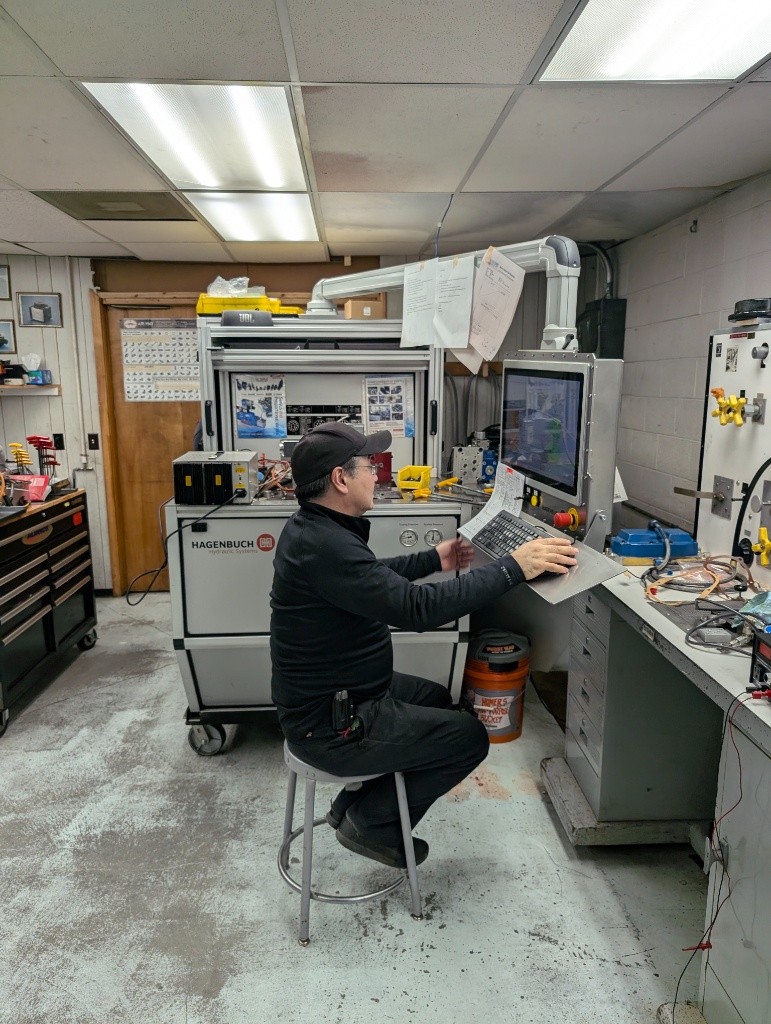
Hydraulic test stand at NC Servo Technology used for proportional valve verification
The hydraulic test stand. Proportional valves run through commissioning checks before they ship back.

Proportional valves often outlast the OEM support window on the machine they are installed on. A press from 1995, a molding cell from 2002, a steel-mill positioning circuit from the 1980s: many of the units we see are older than their factory documentation. The brand mix shifts year to year, but the failures stay consistent across applications.

Proportional vs Servo Valve

How proportional valves differ from servo valves

Both control hydraulic flow proportionally to an electrical signal, but the mechanism, the tolerance for dirty oil, and the bench work are different.

A servo valve uses a small two-stage architecture: a torque motor or jet pipe pilot stage drives a close-tolerance spool through tight tolerances, with a feedback wire that mechanically closes the loop. Bandwidth is high (often 100 Hz or more on smaller units), deadband is small, and oil cleanliness has to be tight (ISO 4406 17/15/12 or cleaner) because the pilot path is the most sensitive part of the unit.

A proportional valve uses a larger coil-driven solenoid that pushes the spool directly. Standard proportionals are open-loop. Servoproportional variants add an LVDT on the spool and onboard or external electronics to close the loop. Bandwidth is lower than a true servo valve (often under 50 Hz on standard, higher on servoproportional), flow capacity is higher, and the unit tolerates dirtier oil (ISO 4406 19/17/14 is common).

Bench work overlaps in spirit but differs in detail. Servo valves require pilot stage cleaning and very fine flapper inspection. Proportional valves require coil and solenoid inspection, spool and bore service, and (on servoproportional variants) LVDT and OBE diagnostics. For more on the servo valve side, see what is a servo valve.

Proportional valveServo valve
Pilot stage None on direct-operated; pilot stage on two-stage variants is hydraulic, not torque-motor. Torque motor or jet pipe with very tight tolerances.
Feedback Open-loop on standard proportional. LVDT on servoproportional. Mechanical wire from spool to pilot, closed-loop by design.
Bandwidth Often under 50 Hz on standard; higher on servoproportional. Often 100 Hz or higher on smaller units.
Flow capacity Higher; built for larger flow class applications. Lower than equivalent-size proportionals.
Oil cleanliness Tolerates ISO 4406 19/17/14 in most installations. Usually requires ISO 4406 17/15/12 or cleaner.
Common families Bosch Rexroth 4WRPH, 4WRPEH, 4WREE, Atos DLKZOR, DHZO, Yuken EHFBG, Duplomatic DXE. Moog 760, HR Textron 27, Vickers SM4, Atchley 211, Schenck Pegasus 10/120.
Bench focus Coil and connector work, spool inspection, LVDT and OBE diagnostics on servoproportional variants. Pilot-stage cleaning, flapper inspection, feedback-wire checks, long verification pass.

FAQ

Common questions about proportional valves

Plain answers to questions that come up when customers send a proportional valve in for service.

How can I tell if I have a proportional valve or a servo valve?

Look at the part number first. Family codes like Bosch Rexroth 4WRPH, 4WRPEH, 4WREE, 4WRA, Atos DKZOR, DLKZOR, DHZO, DPZO, Yuken EHFBG, or Duplomatic DXE indicate proportional or servoproportional valves. Family codes like Moog 760, HR Textron 27, Atchley 211, Vickers SM4, or Pegasus 10/120 indicate servo valves. By eye, a proportional valve typically has a larger coil-driven solenoid pushing the spool directly. A servo valve has a small two-stage architecture with a torque motor or jet pipe pilot stage. If you are not sure, send the part number and we will tell you what you have.

What is the difference between a proportional valve and a servoproportional valve?

A standard proportional valve is open-loop: the coil pushes the spool against a centering spring, and the spool position is roughly proportional to the input current. A servoproportional valve adds an LVDT (linear variable differential transformer) that measures actual spool position and feeds it back to onboard or external electronics, which adjust the coil current to drive the spool to the commanded position. Servoproportional valves have higher bandwidth, smaller deadband, and tighter accuracy than open-loop proportionals, but lower bandwidth than true two-stage servo valves.

Why does a proportional valve have onboard electronics (OBE)?

Onboard electronics integrate the driver card directly into the valve housing. The OBE handles current regulation to the coils, position-loop closure on servoproportional variants, dither generation, and protection. OBE simplifies wiring (one cable instead of separate driver), but a failed OBE board means the entire valve has to come off the machine for repair. We see OBE failures from voltage spikes, heat damage, vibration, and contamination on the connector pins. Bench work involves diagnosing whether the failure is the OBE board, the LVDT, the coils, or the spool, then component-level repair.

Can a proportional valve be repaired or does it have to be replaced?

Most can be repaired. The common failures (burned coils, contaminated spools, worn seals, OBE board damage, LVDT failures on servoproportional variants) are bench work. Less common failures (cracked housings, deeply scored bores, severely damaged spool sleeves on the high-accuracy servoproportional units) sometimes need donor parts or are not economical to repair. We open the unit, look at it, and let you know which side of that line it sits on. See repair vs replace for the longer version.

How long does a proportional valve repair take?

It varies. Lead time depends on the valve, what is wrong with it, and whether donor parts have to come off another unit. The honest answer is the office can give you a current estimate once a tech has opened the unit and seen what it actually needs. Send the unit and the part number, give us a call, and we will let you know.

Can proportional valves run dirtier oil than servo valves?

Generally yes. The clearances inside a proportional valve are larger than the pilot-stage clearances on a true servo valve, and the spool moves through a wider stroke under direct solenoid force. Proportional valves typically tolerate ISO 4406 19/17/14 hydraulic oil, while servo valves usually require 17/15/12 or cleaner. Servoproportional valves with LVDT feedback fall somewhere in between. Cleaner oil always extends life regardless of valve type.

Have a proportional valve that needs work?

Send the part number off the nameplate. We will check the donor pool, suggest a rebuilt match if we have one on the shelf, and tell you what the repair would involve.

Get in Touch

Brand names, model numbers, and trademarks mentioned on this page (Bosch Rexroth, Atos, Yuken, Duplomatic, Eaton, Vickers, Parker Hannifin, Continental Hydraulics, Joucomatic, Asco, Hawe, Hydronorma, Daikin, Sauer-Danfoss, Schenck Pegasus, Moog, HR Textron, Atchley, and others) are the property of their respective owners. NC Servo Technology is an independent third-party repair facility working on this hardware since 1975. We are not affiliated with, authorized by, sponsored by, or endorsed by any OEM mentioned. References to specific models are made for the purpose of identifying the equipment we work on.