What Is a Servo Drive? Inside the Drives and Why They Need Repair | NC Servo Technology
NC Servo Technology - Westland, Michigan 734-326-6666

Educational Reading. Independent Repair Shop.

What Is a Servo Drive?

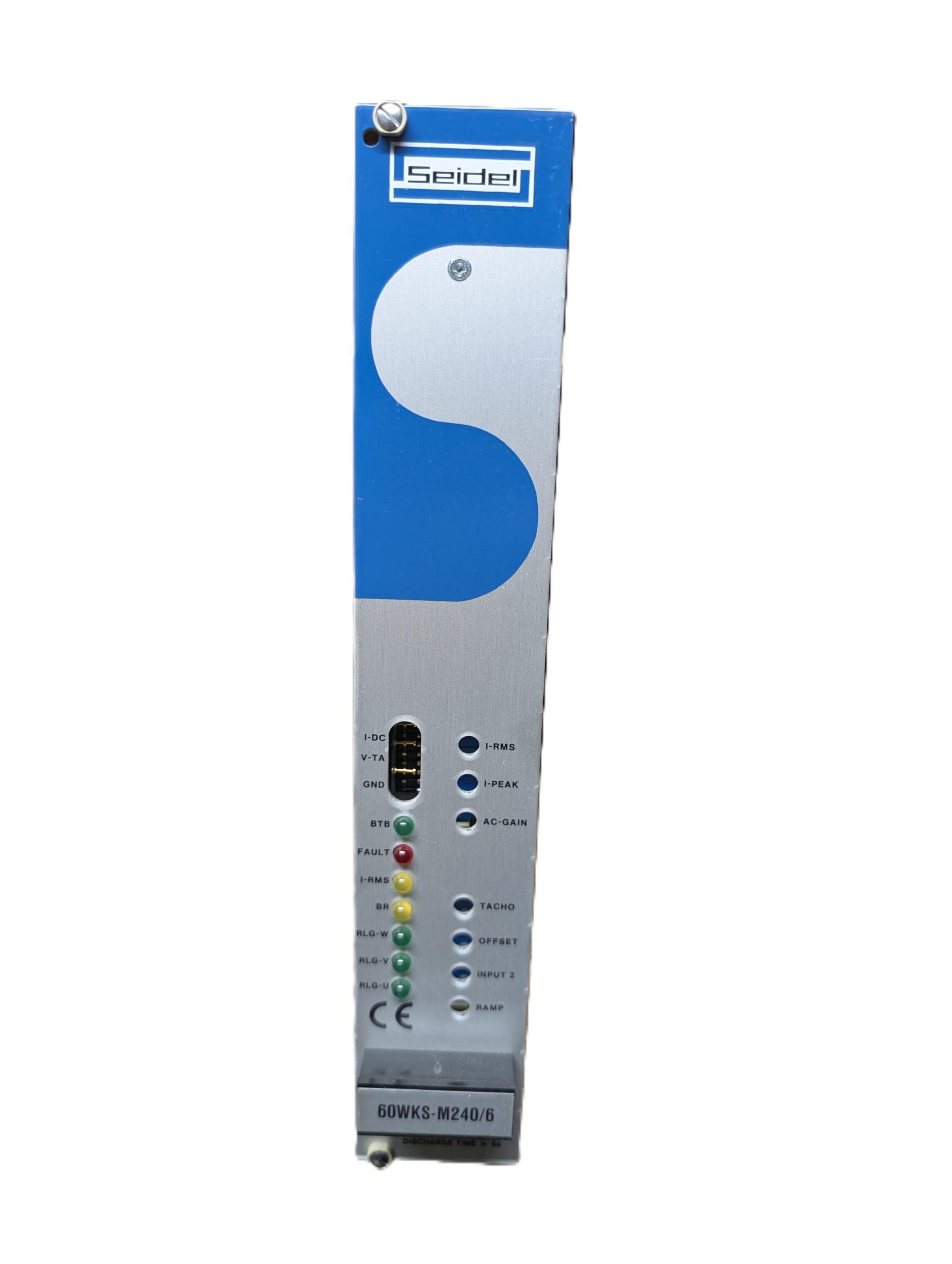
A servo drive is the power electronics that close the loop on a servo motor: take a command signal, supply current to the windings, read feedback from the encoder or resolver, and correct the next millisecond of torque, velocity, or position. The unit shown here is a Seidel 60WKS, one of many servo drives we see come through the bench. The architecture changes brand to brand, but the work is mostly the same.

Since 1975Working on this hardware
Component-levelBoard work, not swap-out
1-year warrantyParts and workmanship
Seidel 60WKS servo drive in for service at NC Servo Technology
Seidel 60WKS-M240/6 servo drive. In for service at NC Servo.

What It Is

Built to switch fast and stay cool, in two main architectures

Servo drives come in two main architectures: analog and digital, with hybrids in between. Most of what comes through the bench is one or the other, and the bench work overlaps but is not identical.

Analog servo drives are the older, simpler pattern. The control loop is closed by op-amps and discrete components. Command in, current sensed on the motor leads, feedback compared on a difference amplifier, current and voltage adjusted by a power stage built around bipolar transistors or MOSFETs. They were the dominant design from the 1970s through the 1990s. Heldt & Rossi 807, Vickers BRD-4S, Electro-Craft BRU, Atchley servo amplifiers, and most older Eurocard-format units are in this group.

Digital servo drives use a microcontroller or DSP to do the loop math. They sample feedback at high rate, compute the error, and adjust the IGBT bridge accordingly. They became dominant from the late 1990s onward. Allen-Bradley Kinetix, Indramat IndraDrive, Kollmorgen AKD, ABB MicroFlex, and Yaskawa Sigma-7 are all digital.

Inside, both share the same skeleton: a power input stage (rectifier and bus capacitors), a switching power stage (IGBT or MOSFET bridge), control electronics, feedback inputs, and protection circuits. The differences are in how the loop math is done and how the unit gets configured. The bench work overlaps a lot. A burned IGBT is a burned IGBT. A dried capacitor is a dried capacitor. The differences show up in the control board diagnosis and the feedback channel.

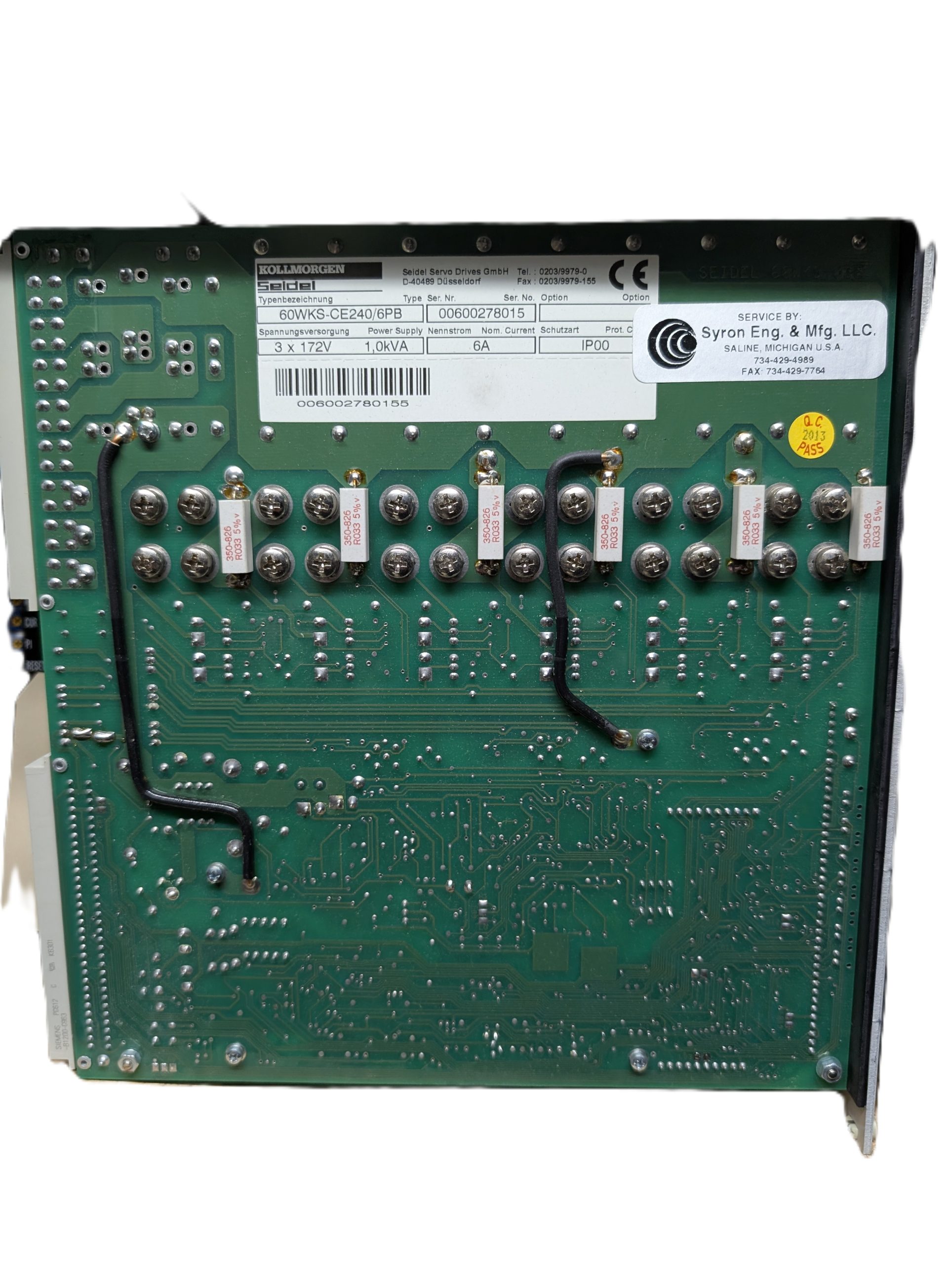
Kollmorgen Seidel servo drive PCB showing power stage, capacitors, and control board
Inside a Kollmorgen Seidel drive: power stage on the right, bus caps in the middle, control board behind.

At the Bench

What we see when one lands on the bench

The first move is the same regardless of brand: open the unit, look at the power stage, check the bus caps, inspect the control board. Most failures show up there. Three groups cover most of what comes in.

Power stage failures

Burned IGBTs, MOSFETs, or older bipolar transistors. Shows up as a unit that trips on overcurrent at startup, blows fuses, or refuses to enable. Often correlated with motor wiring issues, contamination, or an undersized installation that has been running hot for years. Bench work: identify the failed device, source equivalent or compatible replacement (the original part is sometimes obsolete), retest. Cascaded damage to gate drivers and current sense circuits gets checked too.

Capacitor aging

Bus capacitors dry out over years, especially in hot or constantly-energized installations. Symptoms: ripple on the DC bus, intermittent overvoltage trips, derated performance, and in extreme cases an actual electrolyte leak on the bench. Bench work: ESR and capacitance measurement, replace failed caps with same-spec equivalents (matched ratings, voltage, temperature class), reform the new caps before re-energizing.

Control board and connector issues

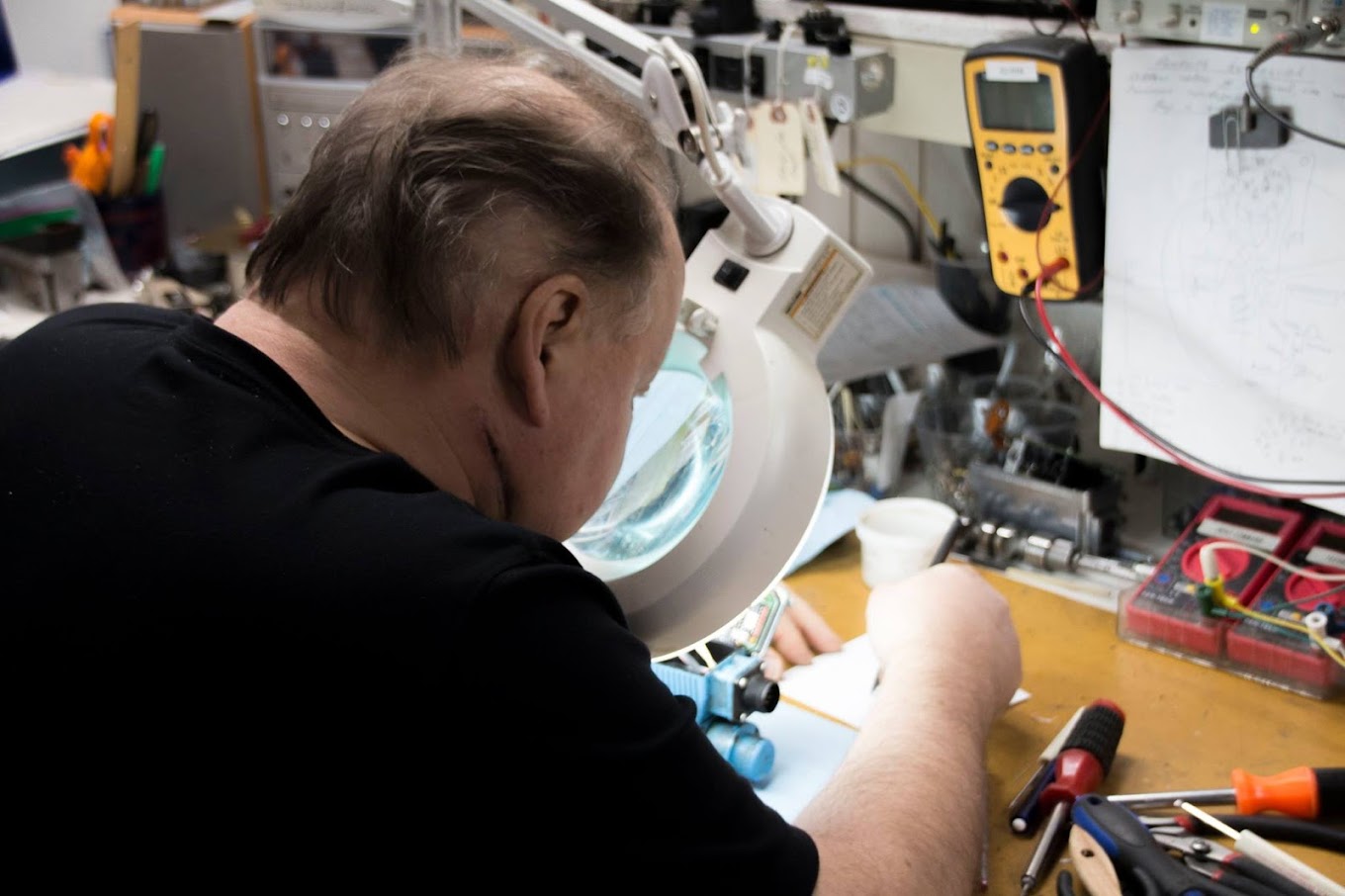
Burned solder joints, cracked passive components, contaminated connectors, or feedback channel failures. Symptoms vary: encoder errors, drift, won't tune, won't enable, faults that come and go. Bench work: visual inspection under magnification, signal tracing, connector cleaning, sometimes reworking solder joints, sometimes pulling a donor board off another unit in inventory.

Last step on every drive, regardless of what came in: the unit goes on a bench load (a real servo motor or a dyno) and runs through commissioning checks: power-up, bus voltage, idle current, fault behavior, position-loop response. If it doesn't pass, it goes back to the bench.

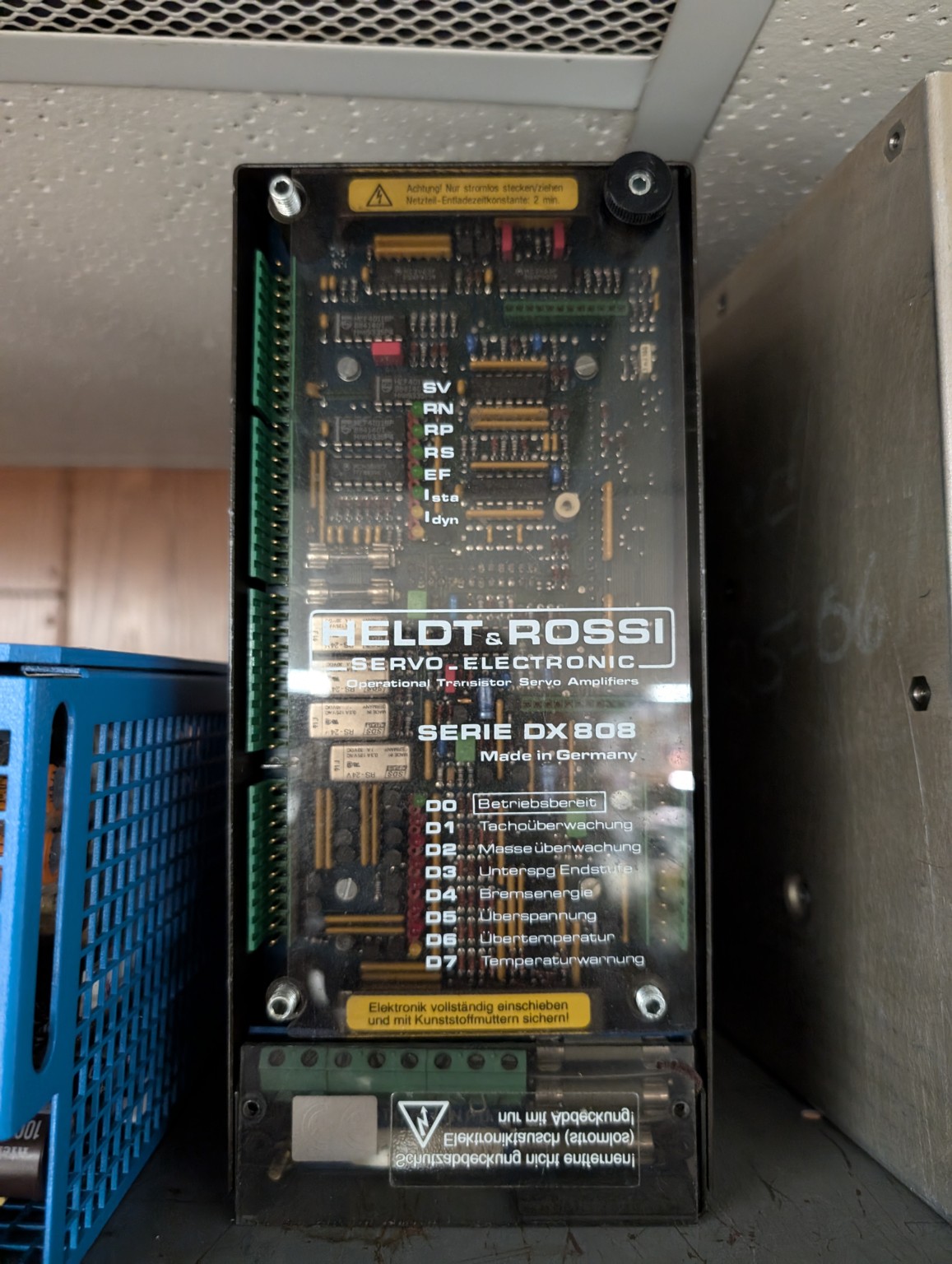
Heldt Rossi SERVO ELECTRONIC Serie Dx 808 servo amplifier in for service at NC Servo Technology
A Heldt & Rossi Serie Dx 808 servo amplifier on the bench. Older Eurocard-format analog drives are still in service in plenty of older machines.

How to Identify One

How to know if you have a servo drive

Three ways to figure out what is in your hand: read the nameplate, recognize the architecture, or trace it from the machine. Most of the time the nameplate is the fastest answer.

1. Read the nameplate.

Every servo drive ships with a label or stamped plate. Brand and model number are usually all anyone needs. Brand tells you what control architecture and connector layout to expect. Model number tells you continuous current rating, peak current, supply voltage, and whether the unit is single-axis or part of a multi-axis stack.

If the nameplate is dirty, wipe it and write the number. Send the info to NC Servo and we can usually identify the drive, including the matching motor it was paired with on the original machine.

2. Recognize the architecture.

Analog servo drives have a discrete-component control board: op-amps, trimpots for null and gain, often a multi-turn potentiometer adjustment. Digital servo drives have a microcontroller or DSP, fewer trimpots, more LEDs and digital diagnostic codes, and usually a configuration port (DB-9, USB, or Ethernet).

Both have a power input section with a rectifier bridge, bus capacitors, and an IGBT or MOSFET output stage. The architecture is usually obvious once the cover comes off; analog units feel deliberately discrete, digital units feel deliberately compact.

3. Trace it from the machine.

If the unit is still installed and the part number is unreadable, the machine type narrows down what to expect. Servo drives are common on machine tools (CNC mills, lathes, grinders), robotics (six-axis arms, gantries, pick-and-place), packaging machinery (servo-driven indexers and cutters), motion-control axes on production lines, and semiconductor equipment. VFDs are common on pumps, fans, conveyors, mixers, and most general industrial speed-control circuits.

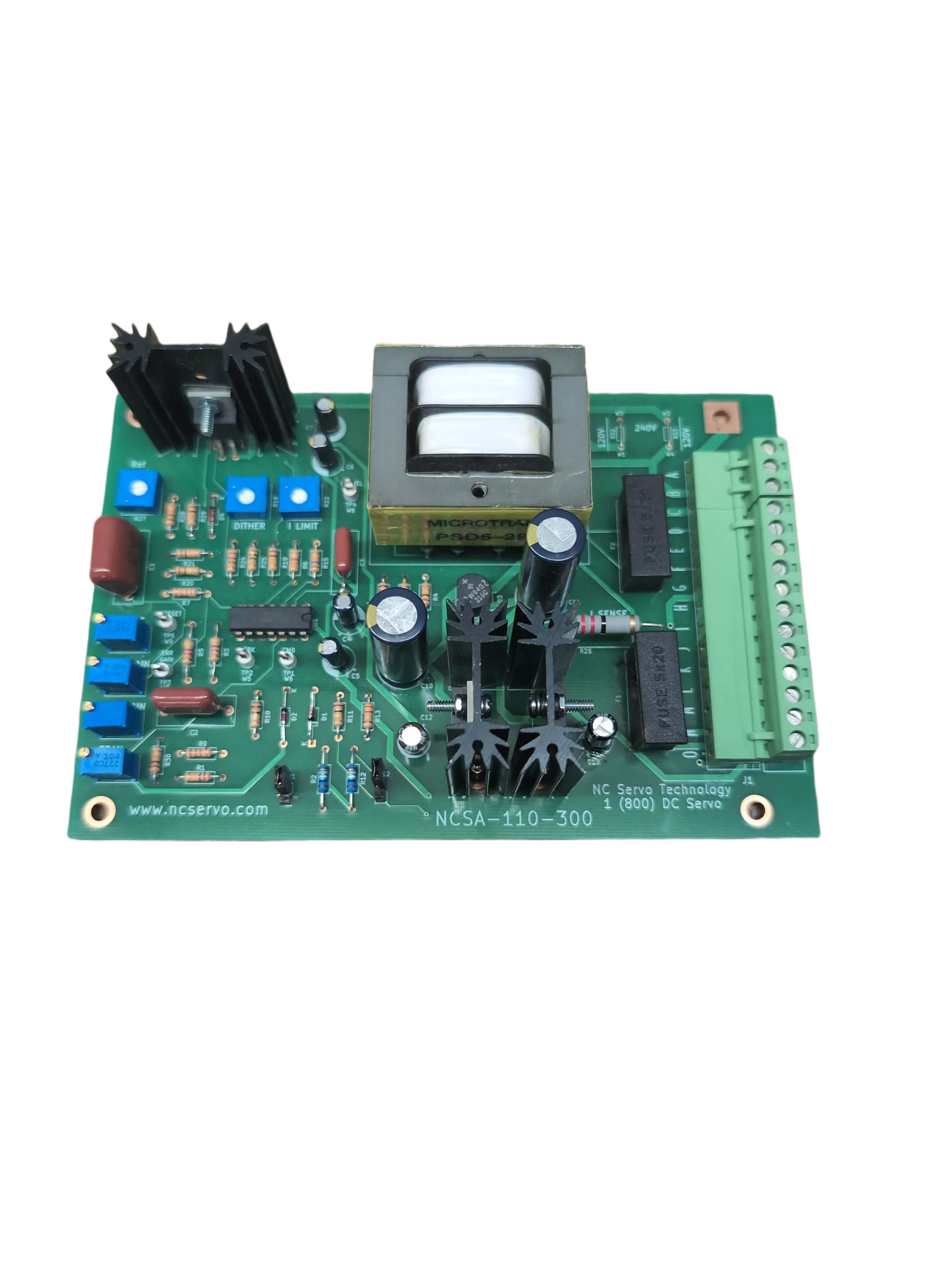
NC Servo NCSA-110-300 servo drive built and serviced at NC Servo Technology
An NCSA-110-300, NC Servo's own product line. Built and serviced in-house.
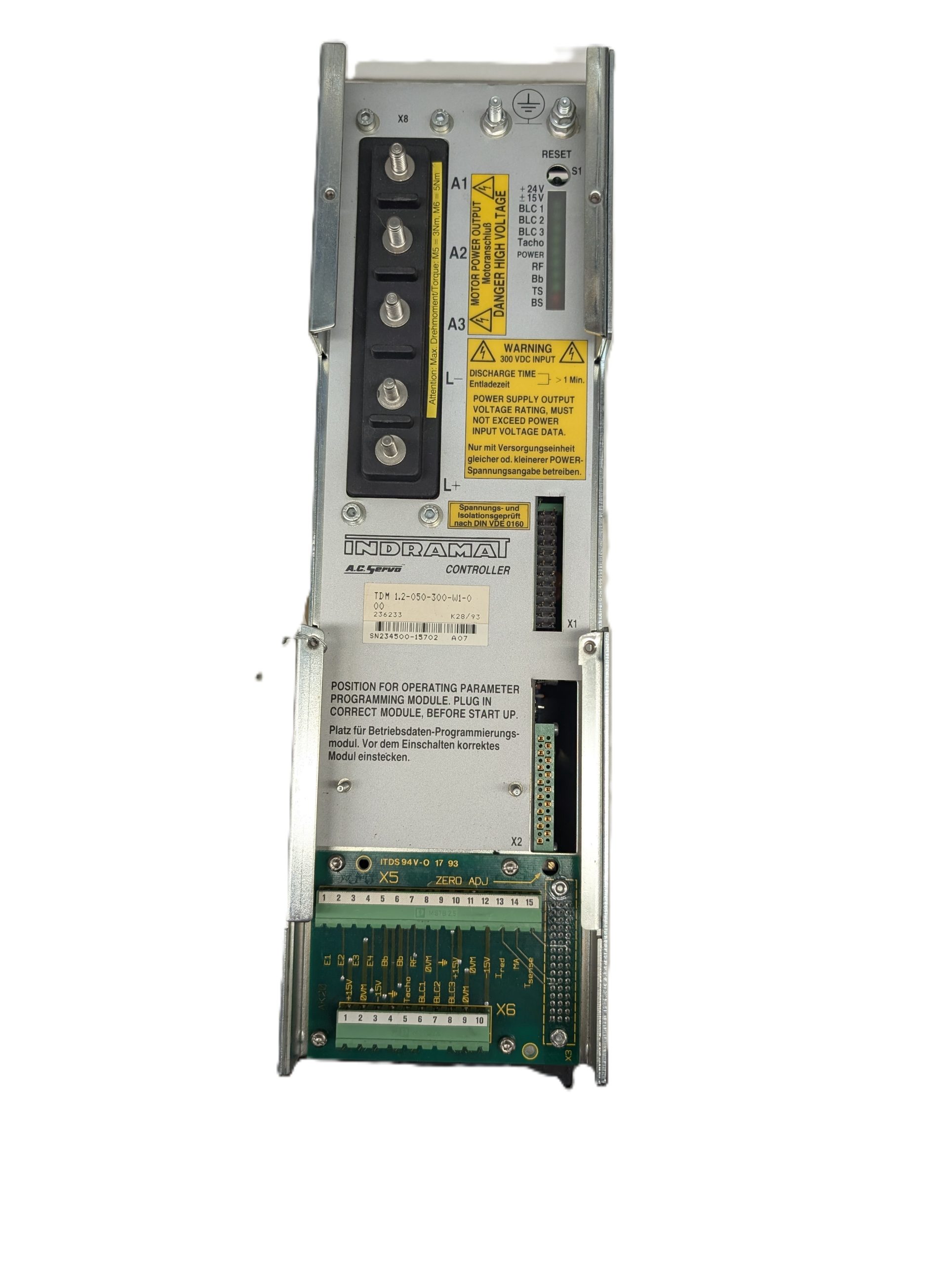
Indramat TDM 1.2 050 300 AC servo controller in for service at NC Servo Technology
An Indramat TDM. Different brand, different shape; the bench work overlaps with what is described to the left.

Major Families We See

The servo drive brands that come through the bench

Each brand has its own quirks, layouts, and failure patterns. The notes below are based on what comes through NC Servo's shop, not factory documentation. Send the nameplate info if you are not sure what you have.

Servo drive donor stock and electronics on shelves at NC Servo Technology
A slice of the donor pool. Drives come off retired machines and stay on the shelf for parts.
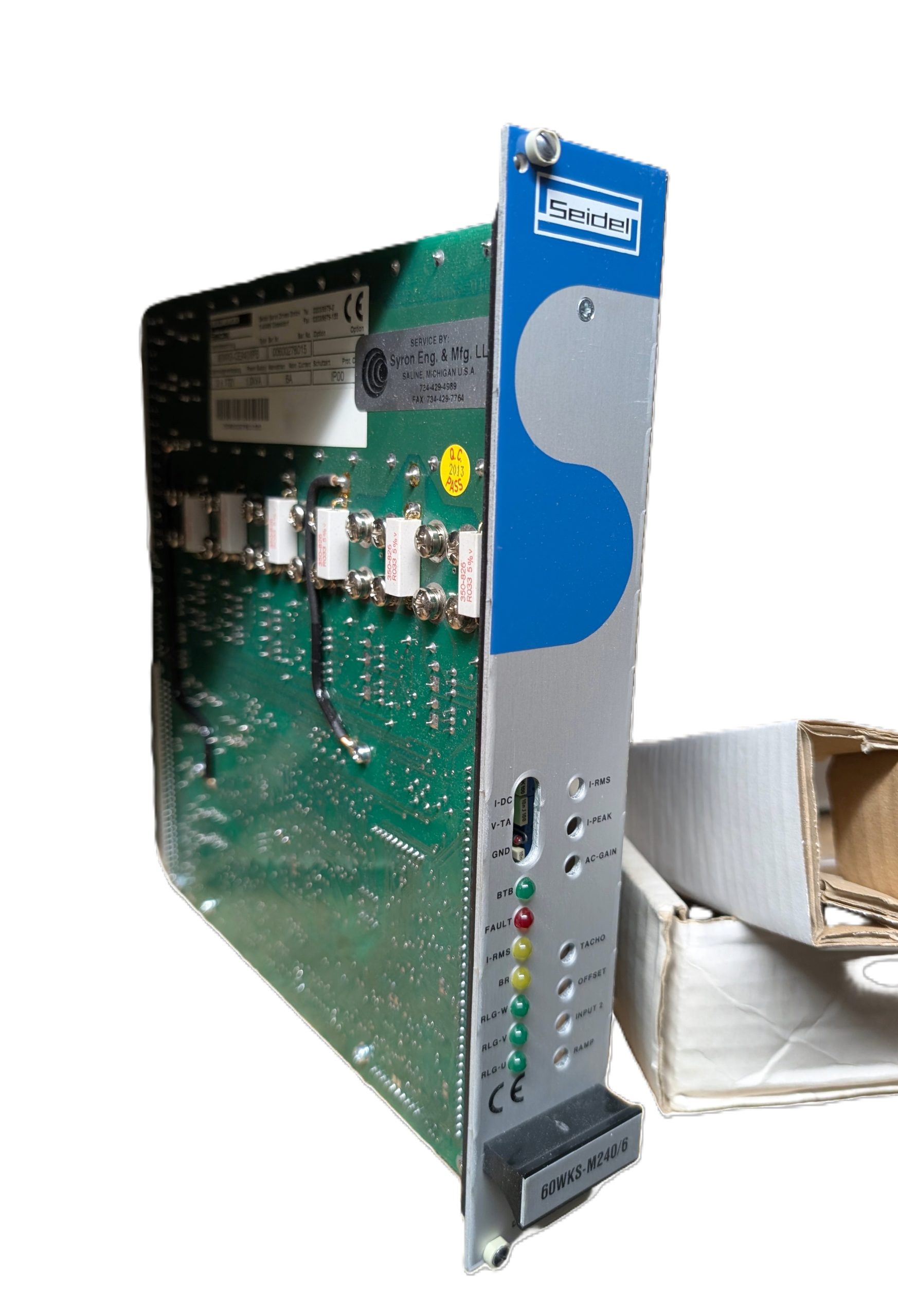
Seidel 60WKS servo drive side view at NC Servo Technology
Seidel 60WKS, side view. Compact Eurocard-format drives stay in service for decades.
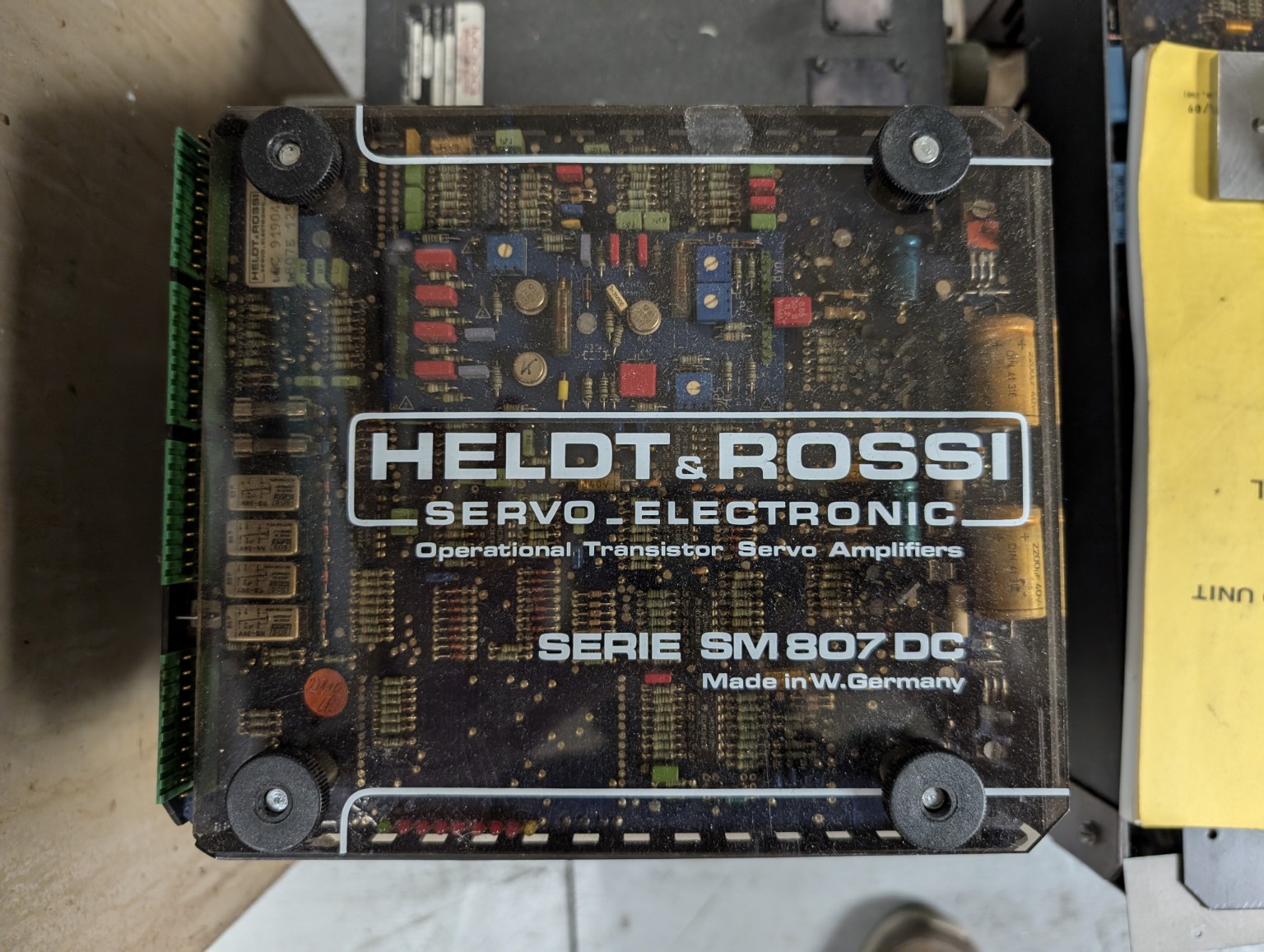
Heldt and Rossi servo electronic control unit serviced at NC Servo Technology
A Heldt & Rossi servo electronic. Older analog amps still come in regularly from European-built machines.

Allen-Bradley (Rockwell Automation)

The Kinetix family is the workhorse lineup. The Kinetix 6000 and 6500 were the workhorses through the 2010s; the 6000 is discontinued and the 6500 is being phased out, with the newer Kinetix 5100, 5300, 5500, and 5700 lines covering current installations. Older Allen-Bradley servo drives include the 1394 series and the 1336 series, both still seen in service on installed machinery. Allen-Bradley drives are some of the most commonly installed servo drives on machine tools and robotics in North America. Parameters and firmware are usually accessible through Connected Components Workbench or Studio 5000; if a unit ships without backed-up parameters, recovery depends on what the customer has on file.

Indramat (now Bosch Rexroth)

Indramat was independent from 1958, was acquired by Rexroth in 1965, and ended up under Bosch when Bosch bought Rexroth in 2001. The modern line is IndraDrive (HCS compact controllers, HMS single-axis units, HMD modular double-axis sections, HMV power supply modules). Older Indramat servo drives (TDM single-axis modules, DKC compact drives, DDS dual-axis drives, KDS series) are still in service on lots of machine tools, paired with TVD power supplies. Spares for the older TDM/TVD lines are increasingly hard to source new, which is part of why we keep donor units.

Kollmorgen and Seidel

Kollmorgen AKD is the modern line. Older Kollmorgen units (Servostar, BDS-5, PRD, S700) and their Seidel division (60WKS, MOTORDRIVE, BTB) are common on European-built machines. Seidel drives are generally compact Eurocard-format units; bench work focuses on power stage, capacitors, and the analog control electronics on the older variants.

Vickers (now Eaton)

The BRD-4S and BRM-4S series are the analog servo amplifiers we see most often. Vickers Trinova electronic controls also come through. The BRD/BRM units are Eurocard-format from the 1980s and 1990s; they pair with Vickers servo motors and were used heavily on machine tool axes and hydraulic positioning circuits.

Heldt & Rossi

German-built analog servo amplifiers, Eurocard-format, often labeled SM, Serie Dx, or 807E. Common on European-built machines from the 1980s and 1990s. Discrete-component construction throughout; bench work usually involves component-level board repair.

Electro-Craft

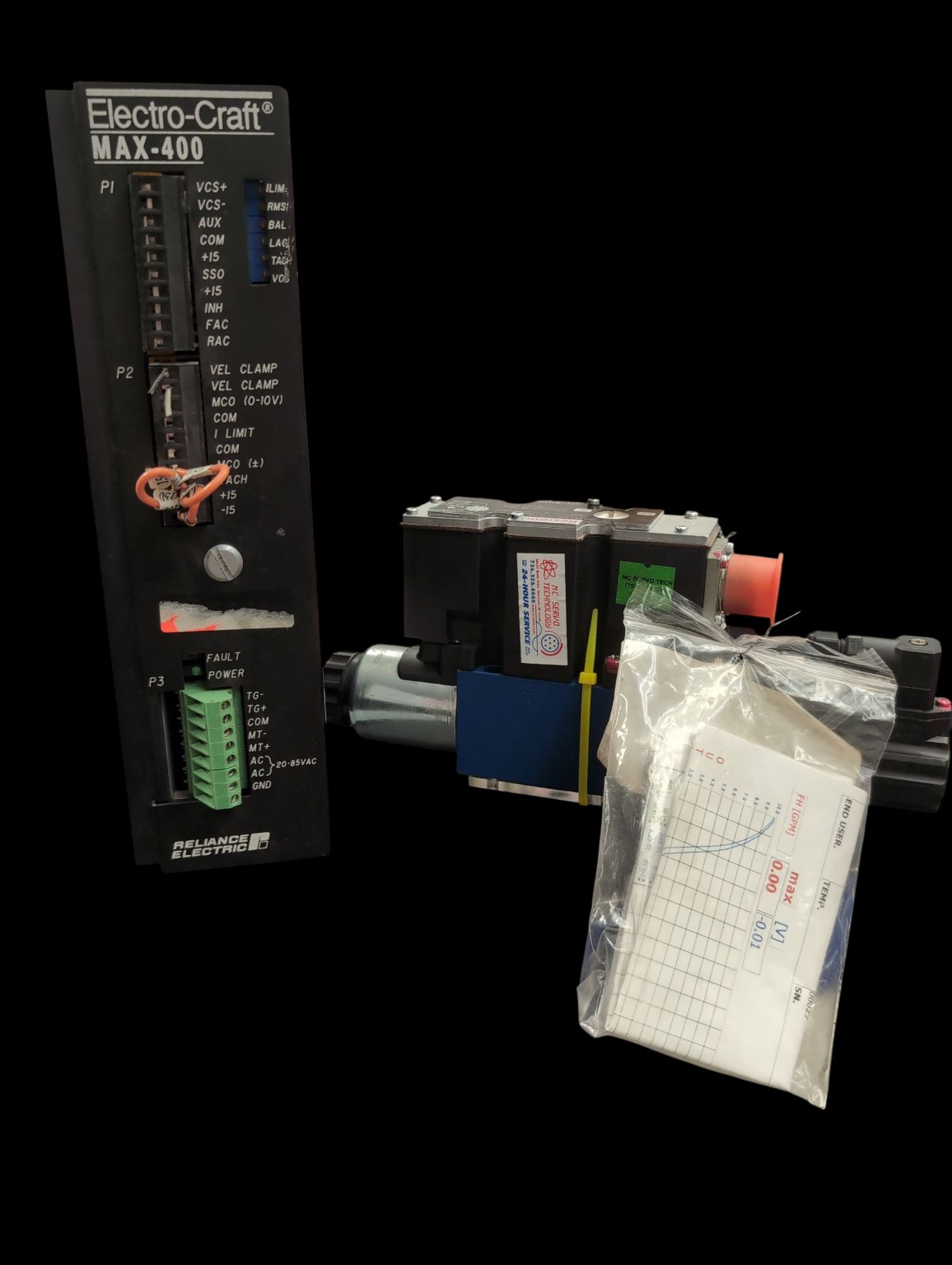
The BRU series (BRU-200, BRU-500) and the MAX series (MAX-200, MAX-400) were the workhorse lines through the 1980s and 1990s. Electro-Craft units paired with their own brushless DC servo motors and were used on machine tools, packaging, and material handling. The brand went through Reliance Electric ownership, then Rockwell, with the motion product line eventually ending up under Baldor and then ABB. Branding on units in the field can read "Electro-Craft," "Reliance," "Baldor," or "ABB" depending on era. The original hardware is still in service in plenty of installations.

Fanuc

Fanuc servo amplifiers and drives are common on Japanese-built machine tools and robots. The alpha series, beta series, and various controller families come through the bench. Fanuc tends toward proprietary firmware and custom-IC architectures, which makes some repairs tricky; bench work focuses on power stage, capacitors, fans, and the connector and feedback channels.

Toshiba

Toshiba servo drives appear on a variety of industrial and material handling equipment, often as TOSVERT-branded units (some of which are VFDs rather than servo drives; the part number is the way to tell). The TOSNUC machine tool controls also use Toshiba servo amplifiers.

Less common, still serviced

We also see ABB (including the MicroFlex line), Yaskawa Sigma, Baldor, Siemens (Sinamics and older Simodrive), Sundstrand industrial amplifiers, Glentek, Pacific Scientific, and a long tail of smaller-brand servo drives. NC Servo also builds and services its own NCSA line. If your nameplate has a brand that is not on this list, send a photo or the model number. The shop has been working on this hardware since 1975, and most of what is out there has come through the bench at some point.

Where They Show Up

Industries and machines that use servo drives

Servo drives live wherever motion has to be exact and responsive. The categories below cover most of what comes through the shop.

Machine tools

CNC mills, lathes, grinders, EDM machines, and large machining centers. Each axis has a servo drive paired with a servo motor and a feedback device. Allen-Bradley Kinetix, Indramat TDM/IndraDrive, Fanuc alpha, and Vickers BRD/BRM are common.

Robotics and motion control

Six-axis arms, gantries, SCARA robots, pick-and-place, and articulated assembly cells. Each joint has a servo drive. Fanuc, Yaskawa, ABB, and Kollmorgen are common in this world.

Packaging and converting

Servo-driven cutters, indexers, registration controls, web tension, and high-speed labelers. Allen-Bradley Kinetix, Indramat IndraDrive, and Bosch Rexroth are common families on packaging lines.

Semiconductor and lab equipment

Wafer-handling robots, lithography stages, mask aligners, and metrology rigs. Servo drives here often have higher accuracy and bandwidth requirements than typical industrial drives.

Material handling and printing

Web tension control, press registration, slitter-rewinders, and some servo-driven conveyors. The drives in this world get used hard, and contamination and capacitor aging are common failure types.

Older industrial equipment

A lot of the work that comes through is on older machines: Eurocard-format analog amps from the 1980s, DC servo systems from the 1990s, and discontinued units that the OEM no longer supports. The donor pool is part of why we can keep these running.

Electronics testing station for servo drive verification at NC Servo Technology
The electronics testing station. Drives get loaded with a real motor or a dyno before they ship back.

The hardware in these industries tends to outlast its OEM support windows. A robot from 1992, a CNC mill from 1996, a packaging line from the early 2000s: many machines we see on the bench are older than their factory documentation. The brand mix shifts year to year, but the failures stay consistent across applications.

Servo Drive vs VFD

How servo drives differ from VFDs

Both are power electronics that run motors, but they do different jobs with different motor types and different control loops. The differences matter for repair and replacement.

A servo drive runs a servo motor (brushless DC, AC servo, or DC servo) and closes a position or velocity loop with feedback from an encoder, resolver, or sin-cos device. Tight current-loop control gives the drive accurate torque control. Used wherever motion has to be exact: machine tool axes, robotics, packaging, motion-control rigs.

A VFD (variable frequency drive) runs a standard three-phase induction motor and adjusts frequency and voltage to control speed. Most are open-loop V/f or vector control without external feedback. Used for variable-speed pumps, fans, conveyors, mixers, and most general process loads.

The bench work is similar in spirit but different in detail. Both have power input stages, bus capacitors, switching power stages, and control boards, and the same component-level repair principles apply. Servo drives have additional feedback circuitry to verify (encoder or resolver inputs); VFDs do not. Servo drives expect tighter tolerances on control loop performance.

Servo driveVFD
Motor type Servo motor (brushless DC, AC servo, DC servo). Standard three-phase induction motor.
Feedback Encoder, resolver, or sin-cos. Closed-loop position or velocity. Usually open-loop V/f or sensorless vector. No external feedback.
Bandwidth High; tight current-loop control with millisecond-class response. Lower; tuned for steady-state speed control.
Used for Machine tool axes, robotics, packaging, motion-control rigs. Pumps, fans, conveyors, mixers, general industrial loads.
Common families Allen-Bradley Kinetix, Indramat IndraDrive, Kollmorgen AKD, Yaskawa Sigma, Fanuc alpha. Allen-Bradley PowerFlex, ABB ACS580, Toshiba TOSVERT, Yaskawa GA800.
Bench focus Power stage, bus caps, control board, feedback channel verification with a real motor or dyno. Power stage, bus caps, control board, motor-current behavior under load.

FAQ

Common questions about servo drives

Plain answers to questions that come up when customers send a servo drive in for service.

How can I tell if I have a servo drive or a VFD?

Look at the motor it drives and the feedback wiring. A servo drive runs a servo motor with a feedback device (encoder, resolver, or sin-cos cable connector visible on the motor). A VFD runs a standard three-phase induction motor with no feedback cable. By model: Allen-Bradley Kinetix, Indramat IndraDrive, Kollmorgen AKD, Yaskawa Sigma are servo drives. Allen-Bradley PowerFlex, ABB ACS580, Toshiba TOSVERT are VFDs. If you are not sure, send the part number and we will tell you what you have.

Can a servo drive's firmware or parameters be recovered if corrupted?

Most failures we see are hardware, and the unit comes back working with its parameters intact. Corrupted firmware or parameter loss is rare. If a unit ships in already corrupted, that is one thing we usually cannot recover. Backup the parameters on a working drive whenever you have the chance; many OEM software packages support upload to a file.

Do you work on aerospace or military servo drives?

Yes. Older mil-spec servo amplifiers, aerospace motion controllers, and qualified servo drives come through the bench regularly. Some ship with control numbers, qualification paperwork, or specific spec callouts. We test against the spec on the unit, document what we did, and ship the unit back with the paperwork. Send the part number off the nameplate first so we can confirm we have donor parts and the spec data on hand.

Can a servo drive be repaired or does it have to be replaced?

Most can be repaired. The common failures (blown IGBTs, dried bus capacitors, burned solder joints, contaminated connectors, fan failures) are bench work. Less common failures (severely damaged PCB traces, obsolete custom-ASIC failures, badly corroded internals) sometimes need donor parts or are not economical to repair. We open the unit, look at it, and let you know which side of that line it sits on. If a rebuilt match is on the shelf, that is an option too. See repair vs replace for the longer version.

How long does a servo drive repair take?

It varies. Lead time depends on the drive, what is wrong with it, and whether donor parts have to come off another unit. The honest answer is the office can give you a current estimate once a tech has opened the unit and seen what it actually needs. Send the unit and the part number, give us a call, and we will let you know.

What is the difference between a servo drive and a servo amplifier?

In current usage, the terms are used interchangeably for the power electronic device that runs a servo motor. Historically, "servo amplifier" referred to older analog units (Heldt & Rossi 807, Vickers BRD-4S, Electro-Craft BRU and similar Eurocard-format devices), while "servo drive" became the term for the digital, integrated units that came out from the 1990s onward (Indramat IndraDrive, Kollmorgen AKD, Allen-Bradley Kinetix). The bench work and the device function are the same; the term you encounter depends on the era and the OEM.

Have a servo drive that needs work?

Send the part number off the nameplate. We will check the donor pool, suggest a rebuilt match if we have one on the shelf, and tell you what the repair would involve.

Get in Touch

Brand names, model numbers, and trademarks mentioned on this page (Allen-Bradley, Rockwell Automation, Indramat, Bosch Rexroth, Kollmorgen, Seidel, Vickers, Eaton, Heldt & Rossi, Electro-Craft, Reliance, ABB, Fanuc, Yaskawa, Toshiba, Baldor, Siemens, Sundstrand, Atchley, Glentek, Pacific Scientific, and others) are the property of their respective owners. NC Servo Technology is an independent third-party repair facility working on this hardware since 1975. We are not affiliated with, authorized by, sponsored by, or endorsed by any OEM mentioned. References to specific models are made for the purpose of identifying the equipment we work on.