What Is a Servo Valve? Inside the Valves and Why They Need Repair | NC Servo Technology
NC Servo Technology - Westland, Michigan 734-326-6666

Educational Reading. Independent Repair Shop.

What Is a Servo Valve?

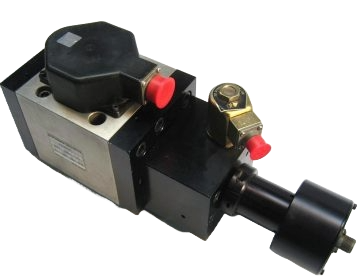
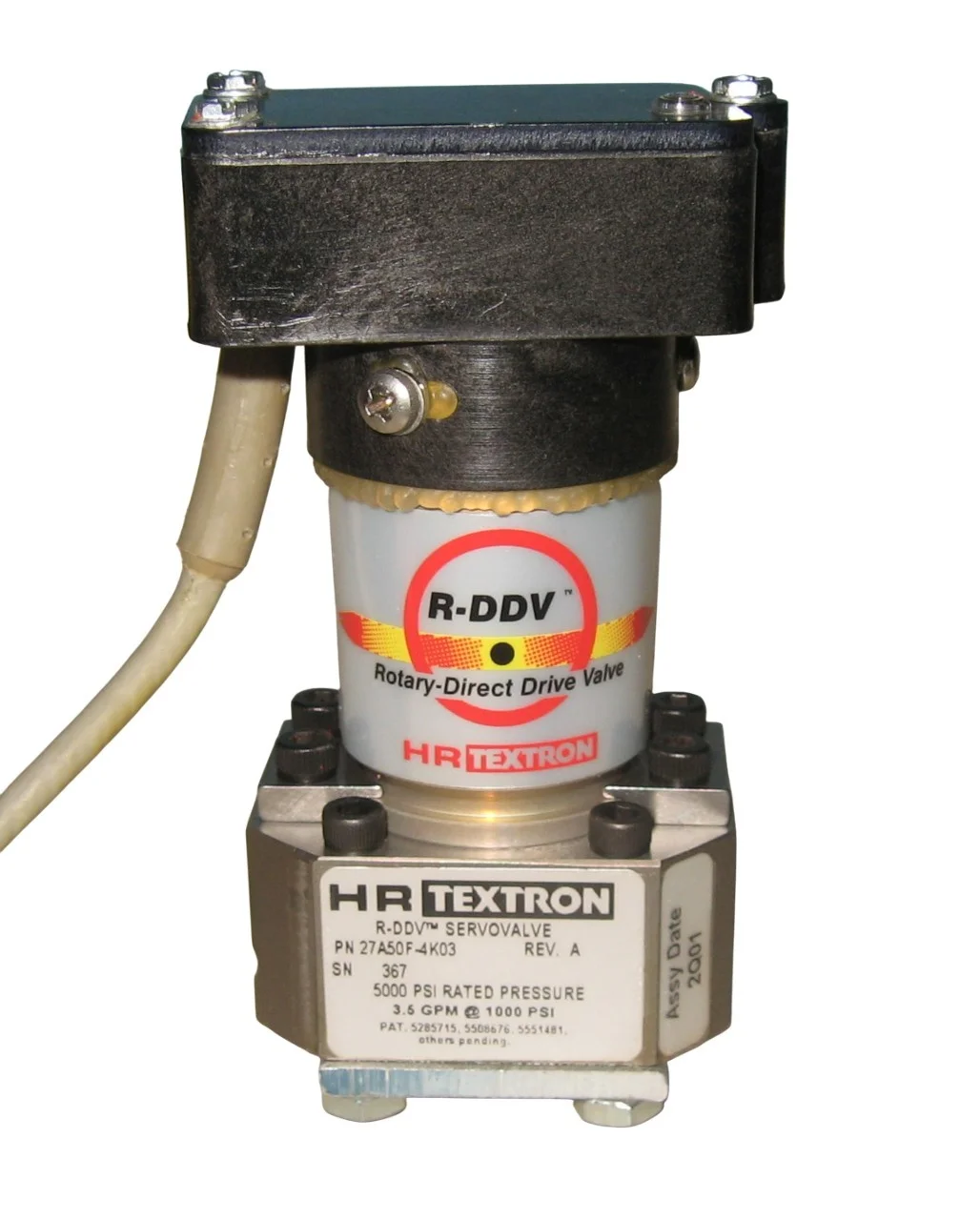
A servo valve is a hydraulic valve built around one job: meter oil to a moving load, watch what the load actually does, and correct the next millisecond of flow until command and feedback line up. The unit shown here is an HR Textron R-DDV, one of the two main servo valve architectures we see come through the bench. The work is mostly the same regardless of brand.

Since 1975Working on this hardware
13 test standsFor verification
1-year warrantyParts and workmanship
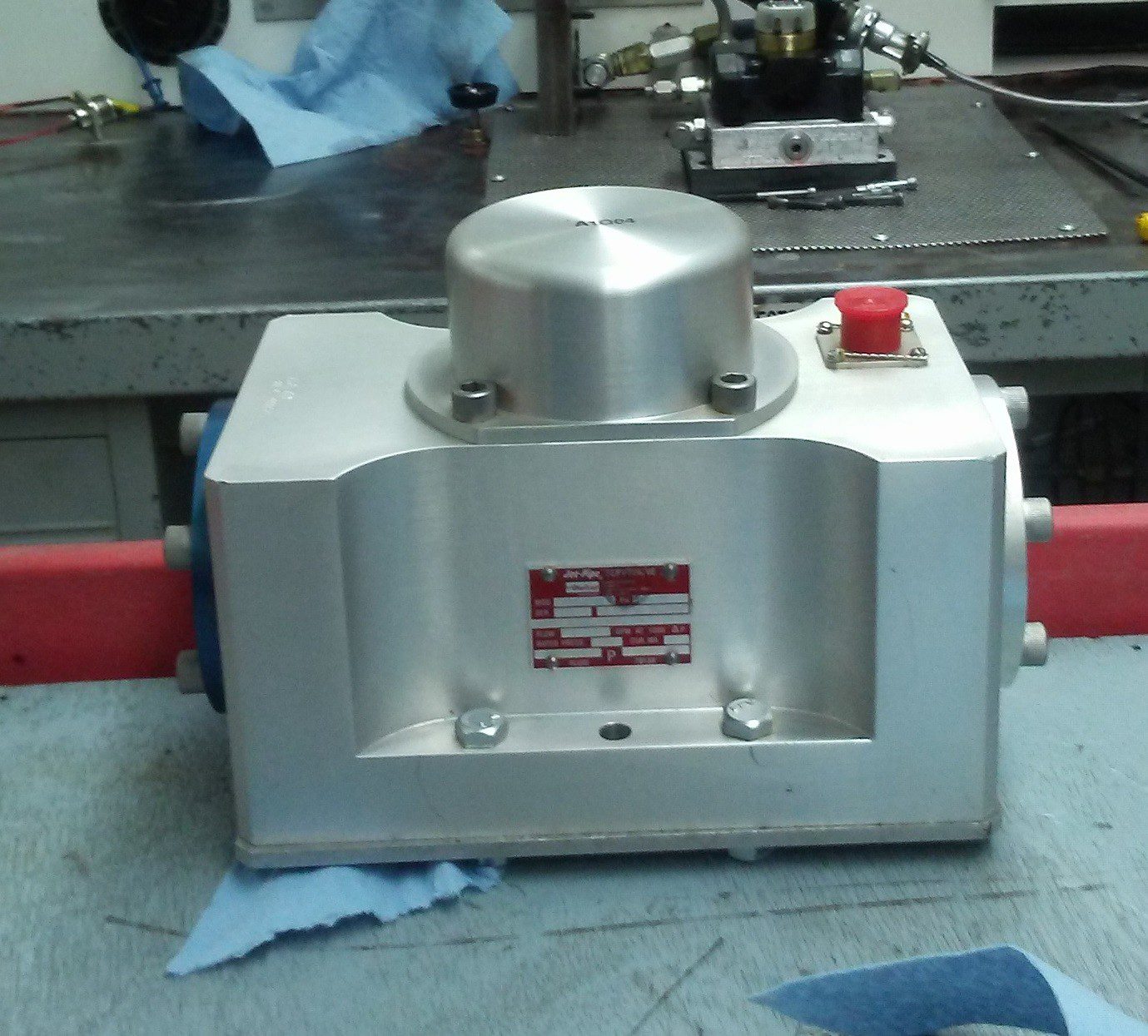
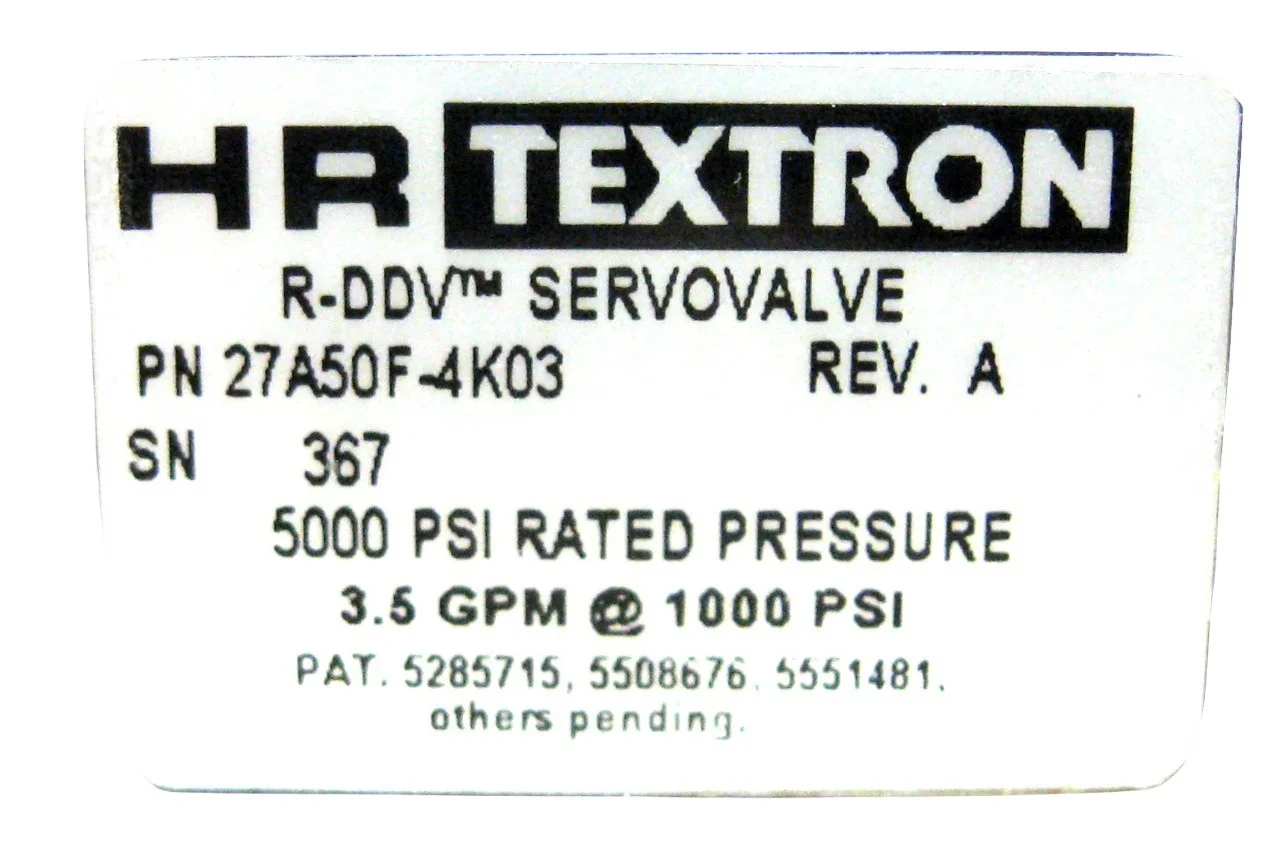
HR Textron R-DDV servovalve, model 27A50F-4K03, in for service at NC Servo Technology
HR Textron R-DDV, model 27A50F-4K03. In for service at NC Servo.

What It Is

Built small and patient, in two main architectures

Servo valves come in two main architectures: two-stage and direct-drive. Most of what comes through the bench is one or the other, and the bench work overlaps but is not identical.

Two-stage is the older and more common pattern. A pilot stage on top (torque motor or jet pipe) does the fine work. A small coil pulls a flapper or rotates a jet against very tight tolerances, and the output of the pilot is a small pressure differential that pushes the main spool below it. As the spool slides, it opens and closes the four ports of the valve, sending pressurized oil to the cylinder and bringing return oil the other way. A feedback wire runs from the spool back into the pilot stage, mechanically tying the two together. The wire bends as the spool moves, biases the pilot, and tells it to back off. The whole assembly is balanced so the spool stops moving once input current and spool position match. That is the closed loop, built into the metal itself. Moog 760, Atchley 211, Pegasus 10/120 series, and Vickers SM4 all follow this pattern.

Direct-drive skips the pilot stage entirely. A larger torque motor or rotary actuator moves the spool directly, and an electronic position sensor (LVDT or rotary feedback) closes the loop electrically rather than mechanically. The unit at the top of this page is the most common direct-drive design we see: an HR Textron R-DDV. Direct-drive valves tend to handle contamination better than jet-pipe valves because the small pilot path is not a failure, and they usually need integrated electronics or an external driver card to run. HR Textron, Woodward, and some Moog G-series are the most common direct-drive families.

Bench work overlaps. A burned coil is a burned coil. A worn spool is a worn spool. The differences show up in the pilot stage on two-stage valves (which does not exist on direct-drive) and in the feedback channel on direct-drive valves (which is electronic rather than mechanical). The article below applies to both unless we call out a specific architecture.
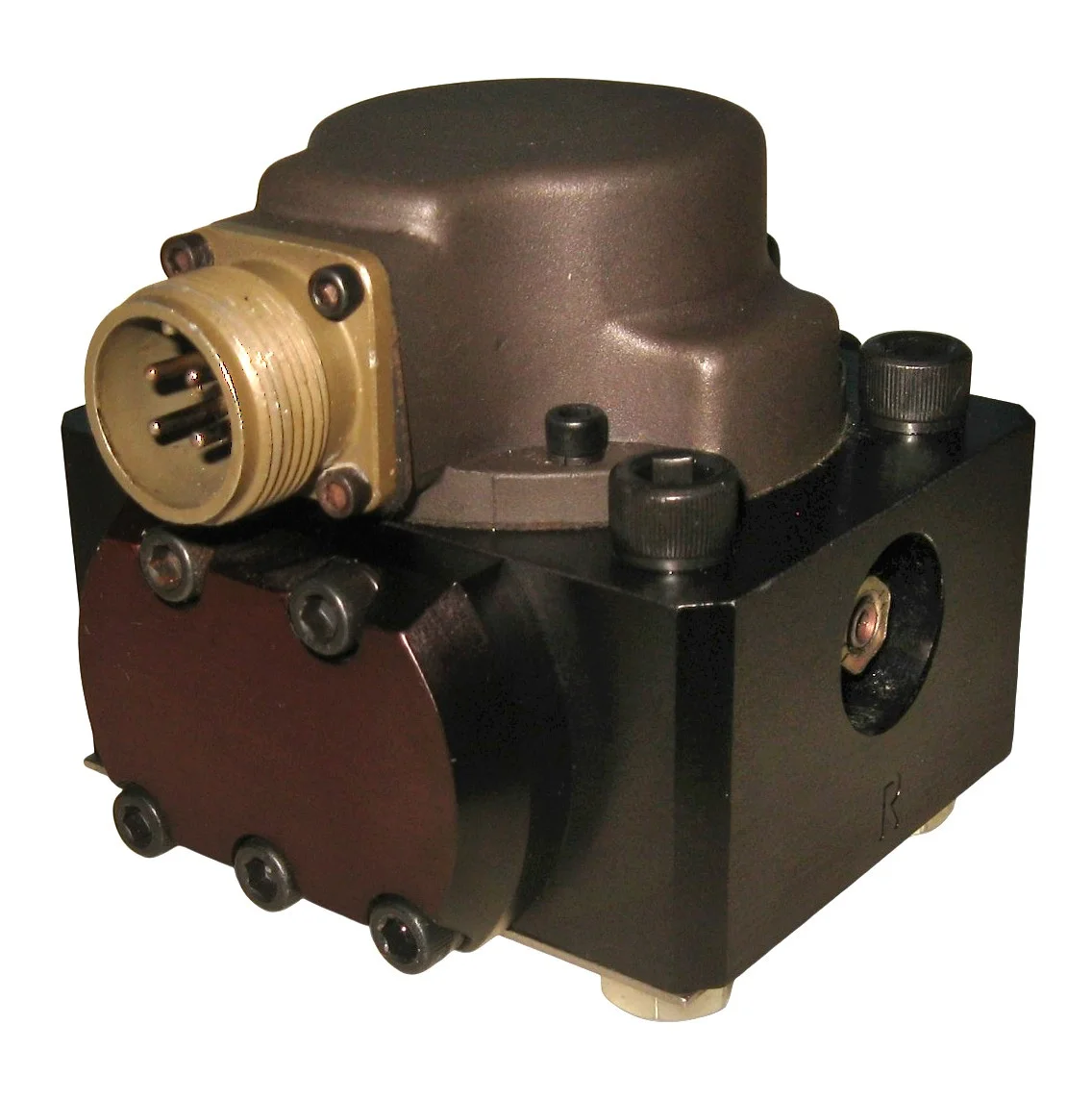
HR Textron R-DDV servovalve detail showing pilot stage, body, and connector
Same R-DDV from a different angle. Pilot stage on top, spool body underneath, connector at the side.

At the Bench

What we see when one lands on the bench

The first move is the same regardless of brand: open the unit, look at the pilot stage, look at the spool, look at the body. Most failures show up there. Three groups cover most of what comes in.

Contamination

The most common one. Particles in the hydraulic fluid eventually find the pilot stage and lodge in the small clearance between the flapper and the nozzles. The unit goes off-null. It might also chatter, hold pressure on one side, or refuse to follow the command at small inputs. Fix: teardown, ultrasonic clean of the pilot path, inspection of the flapper and feedback wire, and reassembly to documented specs.

Coil and connector damage

Burned coil, chafed cable, or corroded connector ring. Shows up as a unit that won't respond to current at all, or responds intermittently. Coil rewinding or replacement is bench work. Cable and connector repair is bench work. Most of these come back working.

Spool wear and body damage

Less common but happens, usually on units that have run dirty fluid for a long time. Spool gets scored or the body bore goes out of tolerance. Sometimes we hone, sometimes we pull a donor body off another unit in inventory, sometimes we let the customer know the valve is past economic repair and help them source a rebuilt match.

Last step on every valve, regardless of what came in: the unit goes on a test stand, runs through the rated current range, and gets verified for null position, flow gain, internal leakage, and step response. If it doesn't hit spec, it goes back to the bench.

Spool machining equipment used for servo valve repair and restoration at NC Servo Technology
Spool machining equipment in the shop. Most of the bench work is small and patient.

How to Identify One

How to know if you have a servo valve

Three ways to figure out what is in your hand: read the nameplate, recognize the architecture, or trace it from the machine. Most of the time the nameplate is the fastest answer.

1. Read the nameplate.

Every servo valve ships with a label, a stamped plate, or both. The brand name and the model number are usually all anyone needs. Brand tells you what shape of pilot stage and what spool architecture to expect. Model number tells you flow class, port size, signal range, and whether there is integrated electronics. If the nameplate is dirty, wipe it clean before writing down the number; OEMs frequently use small or oddly-spaced characters that misread easily.

Send the nameplate info and we can usually identify the valve from the model alone. Photos of the nameplate help when the number is borderline (some Atos and Yuken plates use European date codes that can look like part of the model).

2. Recognize the architecture.

A servo valve almost always has a small two-stage architecture. A pilot stage sits on top: either a torque motor (small horseshoe coil with a flapper) or a jet pipe (a tiny pivoting nozzle). Below the pilot is a spool body with tight bore tolerances and small clearances. A feedback wire usually runs from the spool back into the pilot stage, often visible at the side. Connectors are typically MS-style, Cannon plugs, or integrated coil leads.

If the unit has a large coil-driven solenoid pushing the spool directly, with no separate pilot stage, you probably have a proportional valve rather than a servo valve. If the unit has an obviously larger body with multi-coil drivers and integrated electronics on top, it is more likely a servoproportional or a directional control valve. The architecture is usually visible even before the housing comes off.

3. Trace it from the machine.

If the valve is still installed and the part number is unreadable, the machine type narrows down what to expect. Servo valves are common on flight control rigs, machine tool axes (mill, grinder, lathe slides), test stands, motion simulators, hot-press platens, and material handling servos in steel and paper mills. Proportional valves are common on mobile hydraulics, injection molding clamps, lower-bandwidth presses, and most general industrial flow-control circuits.

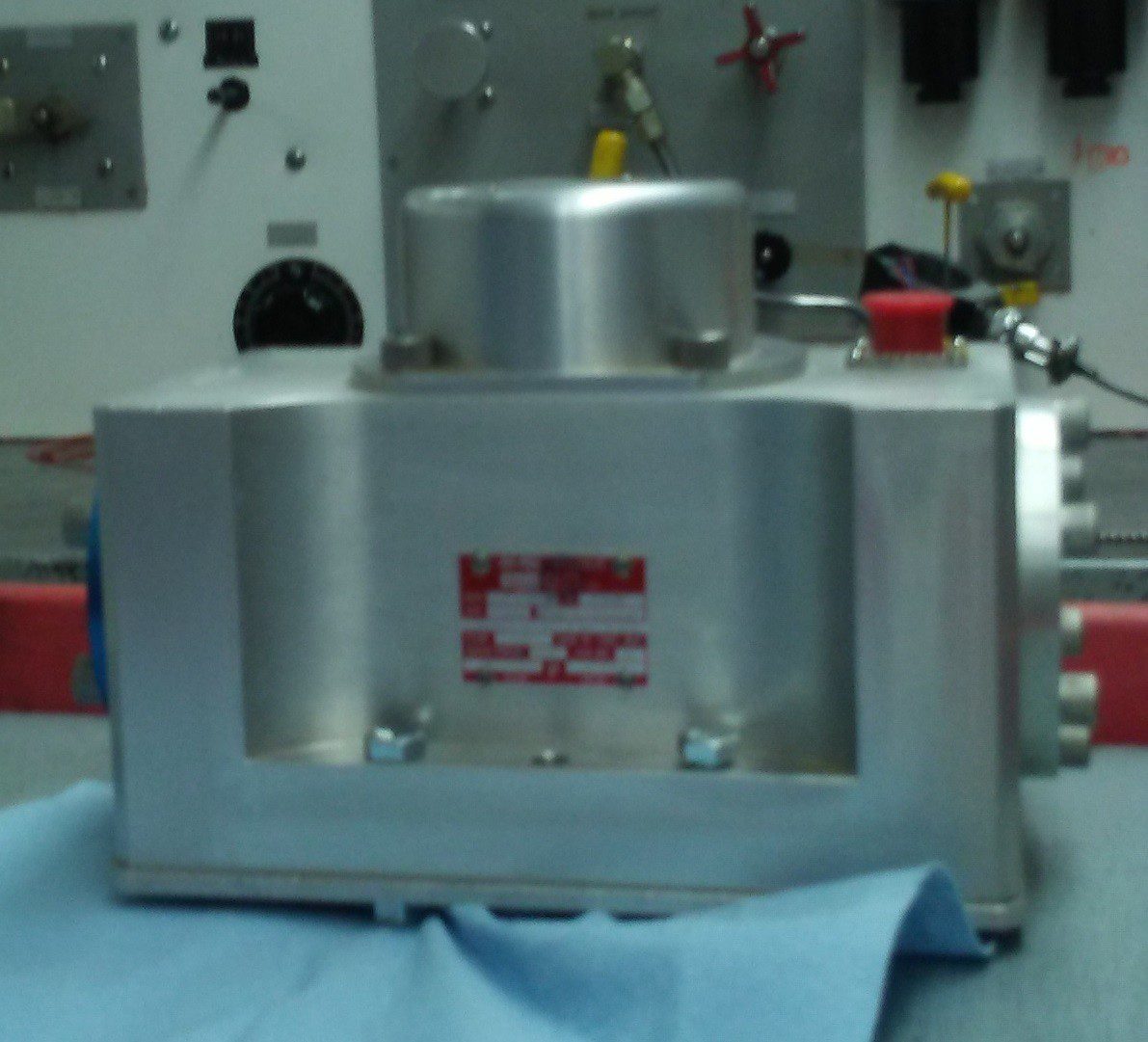
Servo valve on the workbench at NC Servo Technology, in for service
A servo valve in for service. First move on every job is reading the nameplate.
Vickers SM4 servo valve serviced by NC Servo Technology
A Vickers SM4. Different brand, different shape; the bench work overlaps with what is described to the left.

Major Families We See

The servo valve brands that come through the bench

Each brand has its own quirks. The notes below are based on what comes through NC Servo's shop, not factory documentation. Send the nameplate info if you are not sure what you have.

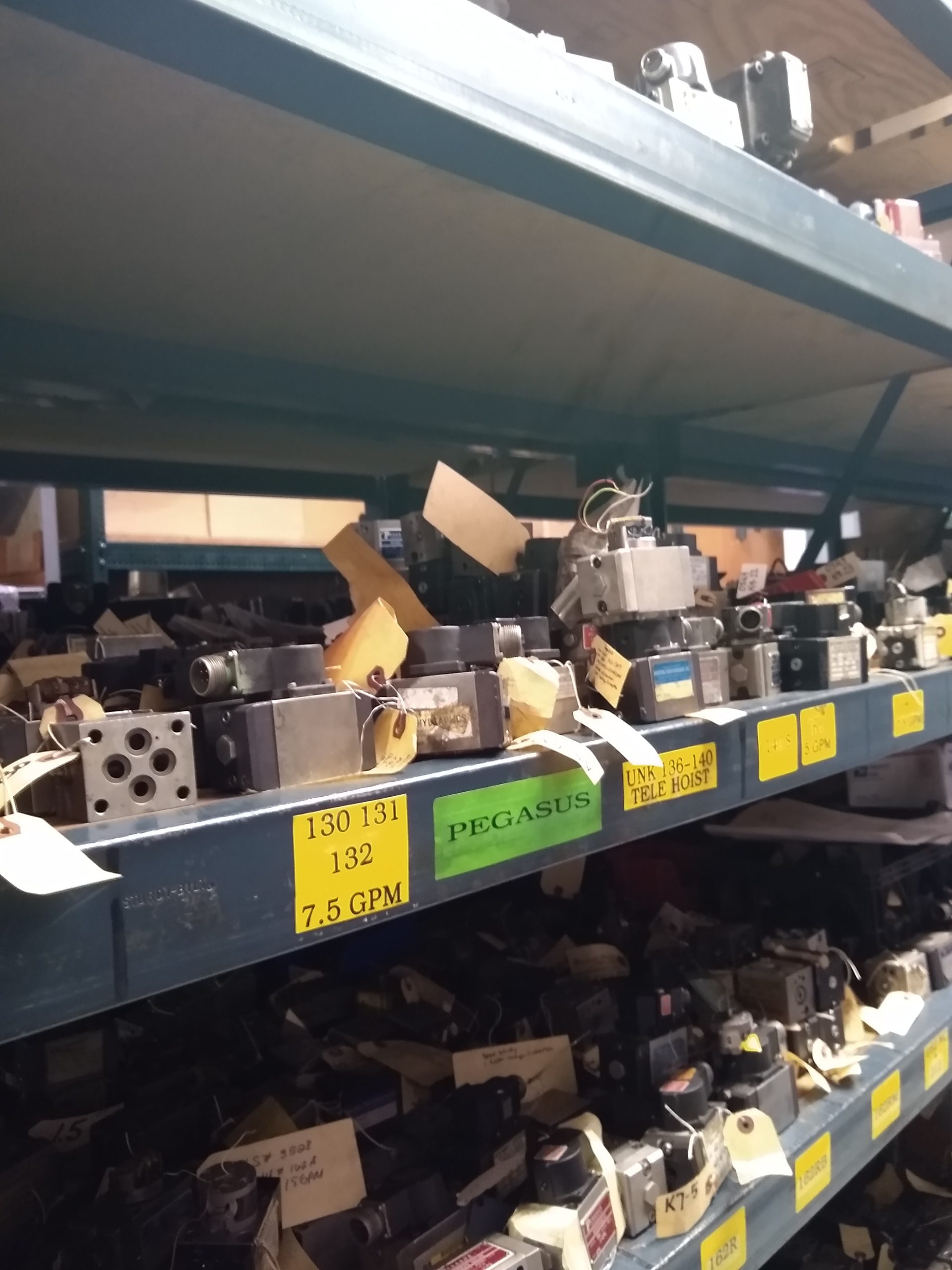
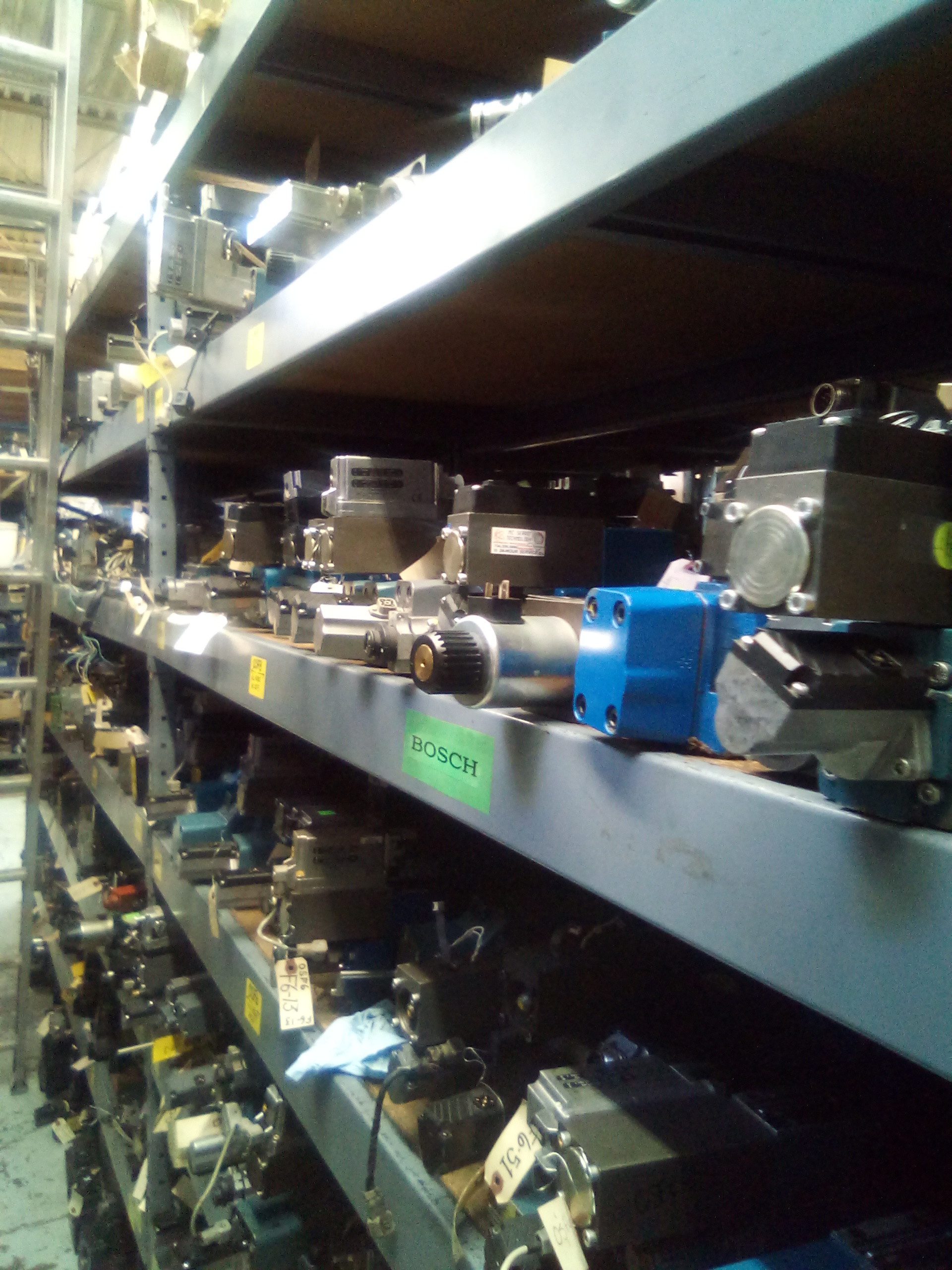
Servo valve donor stock on warehouse shelves at NC Servo Technology
A slice of the donor pool. Several of the brands listed are represented on these shelves.
Servo valve unit on the workbench mid-rebuild at NC Servo Technology
A unit on the bench, mid-rebuild. The brand on the nameplate changes; the work mostly does not.
Pegasus servo valve serviced by NC Servo Technology
A Pegasus servo valve, in for service. Smaller-brand specialist; the OEM no longer supports much of the older line, so we keep donor parts on hand.

HR Textron (also branded Woodward HR Textron)

HR Textron's signature is the R-DDV (Rotary Direct-Drive Valve), the direct-drive servo valve that skips the traditional pilot stage and uses a torque motor with electronic position feedback to move the spool. Older direct-drive servo valves came out of HR Textron's lab and the company built its reputation on them. The 27 series (27A, 27C, 27E, 27G) is the most common family we see; R-DDV units show up a lot on aerospace test rigs and flight controls. Smaller body, often with a screw-on connector cap. Pressure ratings 3000 to 5000 PSI, flow rates from a few GPM up to mid-range. Sometimes ships with control number paperwork; the spec callouts on the unit are what we test against. R-DDV units tend to handle contaminated oil better than jet-pipe valves because the small pilot path is not a failure.

Moog

The most common servo valve brand on the planet. The 760 series is the workhorse. The 72, 78, 79, and 30 series cover higher flow classes; the 73, 77, 743, 744, 771/772/773 and 791 are also in regular service. The older 62-series sometimes still come through. Distinctive cylindrical or rectangular pilot stage on top, often with a red or blue identifier label. The G761 series is a smaller direct-drive variant. Moog units are the bulk of what most repair shops see.

Atchley (now under Moog)

Atchley Controls was founded by Raymond D. Atchley, who introduced the first jet-pipe servovalve in 1957. Moog acquired the Atchley product line in 1998 (via the Raytheon Montek Division acquisition), so current Atchley parts are sold through Moog's Industrial Controls Division. Series we see most often: 211 and 215, plus the broader family that includes 206, 207, 208, 209, 210, 218, 225, 231, 240, 242, and 261. Older designs, often mounted on machine tool axes from the 1980s and 1990s. The original Atchley hardware is still in service in plenty of mills, presses, and machining centers. Donor parts come off retired units in inventory.

Schenck Pegasus

Often labeled just "Pegasus" on the unit. Smaller-brand specialist. The 10, 120, 130, 140, 160, 180, 1060 / 1160 / 1280, and CS series are the families that come through. Limited factory support on older units, which is part of why we keep donor parts on hand. If you have a Pegasus valve and the OEM has stopped supporting it, send the part number; chances are good we have run that family before.

Abex (now Parker Aerospace)

The 410 and 425 series are the typical families. Aerospace heritage; commonly seen on older flight control rigs and test stands. Many units carry both Abex and Parker labels depending on the year. The bench work is the same: pilot stage, spool, coil, seals.

Vickers (Eaton Vickers)

The SM4 series is the main servo valve line. Larger body, often 4-port directional with internal LVDT feedback on later variants. Vickers is also a major proportional valve maker, so confirm the part number; the letter codes between SM4 (servo) and KCG (proportional) are easy to mix up at a glance.

Parker

Parker BD15 and 450 series cover smaller flow class servo valves. Often seen in machine tool axes and test rigs. Parker also services the Abex line under their Parker Aerospace banner; model numbers can include both legacy Abex codes and current Parker codes.

Bosch Rexroth

Bosch and Bosch Rexroth produce both servo and servoproportional valves. The 4WS2EM series is the servo line; the much more common 4WRPH and 4WREE series are servoproportional. If you have a Bosch unit and are not sure which side it falls on, send the part number; the difference matters for the bench work.

Less common, still serviced

We also see CEI, Joucomatic, Hydronorma, Oil-Gear, Sauer-Danfoss, Duplomatic, Yuken, Eaton Hydraulics legacy parts, and a long tail of smaller-brand servo valves. If your nameplate has a brand that is not on this list, send a photo or the model number. The shop has been working on this hardware since 1975, and most of what is out there has come through the bench at some point.

Where They Show Up

Industries and machines that use servo valves

Servo valves live wherever motion has to be exact and responsive. The categories below cover most of what comes through the shop.

Aerospace flight controls

Control surfaces, engine fuel metering, test rigs. HR Textron R-DDV, Moog 73, and Parker 450 are common. Documentation requirements run higher; rated null, leakage, and step response get verified against published specs.

Machine tools

Vertical and horizontal machining centers, grinders, EDM machines, large gantries. Hydraulic axes that need bandwidth a proportional valve can't hit. Moog 760, Vickers SM4, Atchley 215, HR Textron 27.

Motion simulators and test rigs

Flight sims, driving sims, vibration tables, structural test labs. Hydraulic cylinders that have to track a command signal close to real time. Bandwidth and step response matter.

Hot-press and forging platens

Large hydraulic presses where platen position has to be controlled tightly under heavy load. Larger flow class (Moog 79, 78, 30 series, larger Pegasus, larger Vickers), often with internal LVDT feedback.

Injection molding

Some older injection presses run servo valves on the clamp or screw position circuits. Many have shifted to servoproportional over time, but plenty of older Moog, Atchley, and Pegasus units come in from molders running 30+ year-old machines.

Steel, paper, and lumber mills

Heavy industry uses servo valves on positioning circuits inside larger hydraulic systems: edgers, levelers, side-guides, descalers. The hardware here gets used hard and dirty, which is part of why we see them.

Industrial valves and servo components on metal warehouse shelves at NC Servo Technology
Some of the servo valves and donor units in the shop.

The hardware in these industries tends to outlast its OEM support windows. A flight test rig from 1985, a grinder from 1992, a press from the 2000s: many of the machines we see on the bench are older than their factory documentation. The brand mix shifts year to year, but the failures stay consistent across applications.

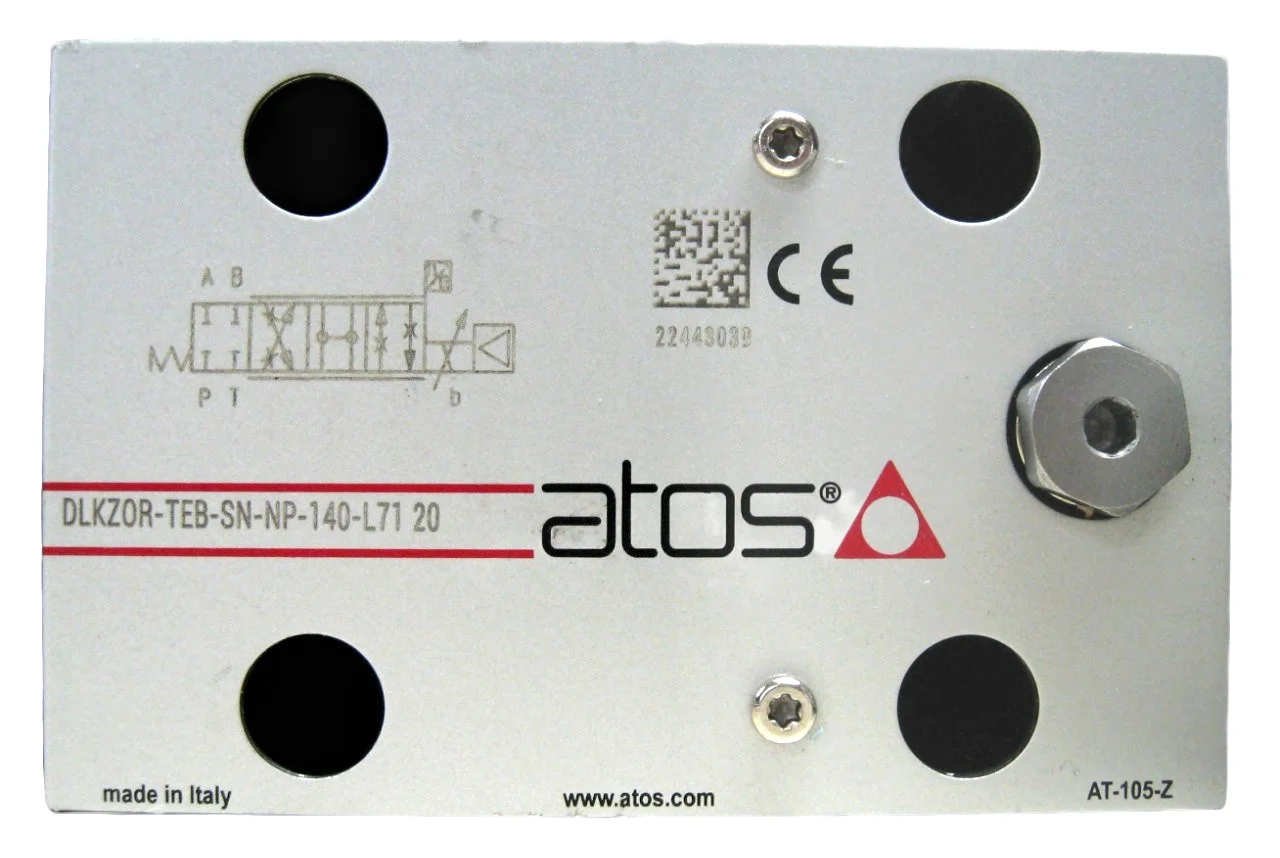
Atos DLKZOR proportional valve in for service at NC Servo Technology
An Atos DLKZOR proportional valve. Different architecture, different bench work.

Servo vs Proportional

How servo valves differ from proportional valves

Both kinds of valves move a spool in proportion to an input current, and both can sit in the same machine doing similar-looking jobs. The differences are mechanical and matter for repair.

A servo valve uses a small pilot stage (torque motor or jet pipe) to push a close-tolerance spool through tight tolerances. Closed-loop feedback is built in. Bandwidth is high, often 100 Hz or more on smaller units. Tolerances are tight, which is also why contamination is the most common failure.

A proportional valve uses a larger coil-driven solenoid that moves a bigger spool directly. Many proportional valves are open-loop, though servoproportional variants add LVDT spool-position feedback. Bandwidth is lower, flow capacity is higher, and the unit tolerates dirtier oil. Common families: Bosch Rexroth 4WRPH, Atos DLKZOR, Yuken OBE EL, Duplomatic DXE.

Servo valveProportional valve
Pilot stage Torque motor or jet pipe with very tight tolerances. Coil-driven solenoid pushing the spool directly.
Feedback Mechanical wire from spool to pilot, closed-loop by design. Open-loop on standard proportional. LVDT on servoproportional.
Bandwidth Often 100 Hz or higher on smaller units. Often under 50 Hz; flow capacity tends to be higher.
Oil cleanliness Usually ISO 4406 17/15/12 or cleaner. Tolerates dirtier hydraulic fluid.
Common families Moog 760, HR Textron 27, Vickers SM4, Atchley 211, Pegasus 10/120. Bosch Rexroth 4WRPH, Atos DLKZOR, Yuken OBE EL, Duplomatic DXE.
Bench focus Pilot-stage cleaning, flapper inspection, feedback-wire checks, long verification pass. Coil and connector work, spool inspection, feedback-channel check on LVDT variants.

FAQ

Common questions about servo valves

Plain answers to questions that come up when customers send a servo valve in for service.

How can I tell if I have a servo valve or a proportional valve?

Start with the part number. Family codes like Moog 760, Vickers SM4, HR Textron 27, Atchley 211, or Pegasus 10/120/130 series indicate servo valves. Family codes like Bosch Rexroth 4WRPH, Atos DLKZOR, or Yuken OBE EL indicate proportional or servoproportional valves. By eye, a servo valve usually has a small torque-motor or jet-pipe pilot stage on top of a close-tolerance spool body. A proportional valve typically has a larger coil-driven solenoid pushing a larger spool directly. If you are not sure, send the part number and we will tell you what you have.

Why do servo valves need cleaner oil than other valves?

The pilot stage clearances on a servo valve are very small, often measured in microns. Particles in the hydraulic fluid can lodge in the pilot path and cause null shift, hysteresis, or complete failure. Most servo valve systems are spec'd to ISO 4406 17/15/12 or cleaner. Standard hydraulic circuits can run dirtier. If a servo valve has been running on contaminated oil, the pilot stage is usually where the damage shows up first.

Do you work on aerospace servo valves?

Yes. HR Textron, Moog, Atchley, Abex, and Parker Aerospace units come through the bench regularly. Aerospace work sometimes ships with control numbers or specific spec callouts (rated null, internal leakage, step response at temperature). We test against the spec on the unit, document what we did, and ship the unit back with the paperwork. Send the part number off the nameplate first so we can confirm we have donor parts and the spec data on hand.

Can a servo valve be repaired or does it have to be replaced?

Most can be repaired. The common failures (contamination in the pilot stage, burned coils, worn seals, damaged feedback wires) are bench work. Less common failures (badly scored spool, cracked housing, severe out-of-tolerance bore) sometimes need donor parts or are not economical to repair. We open the unit, look at it, and let you know which side of that line it sits on. If a rebuilt match is on the shelf, that is an option too. See repair vs replace for the longer version.

How long does a servo valve repair take?

It varies. Lead time depends on the valve, what is wrong with it, and whether donor parts have to come off another unit. The honest answer is the office can give you a current estimate once a tech has opened the unit and seen what it actually needs. Send the unit and the part number, give us a call, and we will let you know.

What is a servoproportional valve?

It is a hybrid: a proportional valve with closed-loop spool-position feedback (typically an LVDT) that runs higher bandwidth than a standard proportional but lower than a true servo. Common families include Atos DLKZOR, Yuken OBE EL, and Duplomatic DXE3J. The bench work is similar to a servo valve plus a feedback-channel verification step.

Have a servo valve that needs work?

Send the part number off the nameplate. We will check the donor pool, suggest a rebuilt match if we have one on the shelf, and tell you what the repair would involve.

Get in Touch

Brand names, model numbers, and trademarks mentioned on this page (HR Textron, Moog, Parker, Parker Aerospace, Bosch Rexroth, Vickers, Pegasus, Atchley, Abex, Atos, Yuken, Duplomatic, and others) are the property of their respective owners. NC Servo Technology is an independent third-party repair facility working on this hardware since 1975. We are not affiliated with, authorized by, sponsored by, or endorsed by any OEM mentioned. References to specific models are made for the purpose of identifying the equipment we work on.