Component-level rebuild
Pilot stage, spool, coil, seal, and connector work. Each unit is opened and inspected; failed components are replaced individually rather than swapping the whole valve.

Valve Repair Hub
Independent third-party servo valve repair and proportional valve repair, plus cartridge and directional control valves. Component-level rebuild, bench testing on the hydraulic stand, and a 19,000+ unit donor parts pool for hardware the OEM no longer supports. Working on this kind of hardware since 1975.
Click a brand to skip straight to its repair coverage.
By Valve Type
Hydraulic valves come in different control types depending on how they steer the spool. Each comes with its own bench work. The shop opens, rebuilds, and verifies all four categories below.
Closed-loop electrohydraulic valves with a torque-motor or jet-pipe pilot stage. Tightest tolerances, smallest deadband. Bench work: pilot stage clean, spool service, coil rebuild, null trim.
Coil-driven directional, pressure, and flow control valves with proportional response. Often with onboard driver electronics. Bench work: coil service, spool work, driver-card checks.
Screw-in and slip-in cartridges, logic elements, and poppet valves on manifold blocks. Bench work: poppet seat work, seal kits, and contamination cleanup on the cartridge body.
Standard on/off solenoid valves and 4-way directional control bodies. Bench work: coil service, seal replacement, body cleanup, and bench-test verification at rated voltage and pressure.
In the Shop
Servo and proportional valves come apart down to the spool, lap surface, and pilot stage. Donor parts come from a 19,000+ unit in-house pool accumulated since 1975, and spool restoration happens on the in-house machining setup when replacement parts are not available from the OEM.
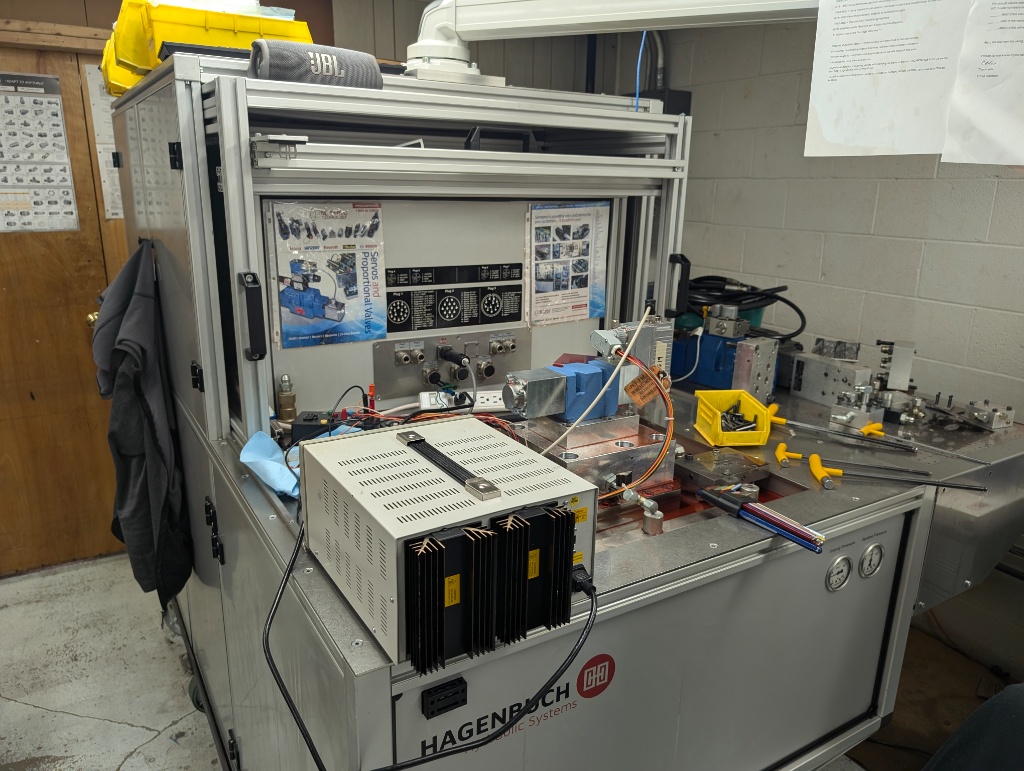
Hagenbusch hydraulic test stand for current and CANbus-capable valves, plus older-style stands for legacy hardware. Performance graphs and detailed test data are available for purchase.
What NC Servo Does
The shop is structured around the same handful of jobs whether the unit is a 1970s servo or a current proportional. Lead time depends on the unit and donor parts availability.
Pilot stage, spool, coil, seal, and connector work. Each unit is opened and inspected; failed components are replaced individually rather than swapping the whole valve.
13 hydraulic test stands including a Hagenbusch for current and CANbus-capable valves, plus older-style stands for legacy hardware. Documented test procedures by family.
19,000+ unit in-house pool. When the OEM no longer stocks parts for an older valve, the shop pulls from donor units that come through.
If a rebuilt match is on the shelf, customers can trade in their failed unit for a discount on the rebuilt one already on hand.
If your specific valve is beyond economic repair and not on the shelf, we suggest a comparable cross-brand option that drops in.
Component-level board repair on proportional and servoproportional valves with integrated driver electronics. LVDT and feedback channel verification.
Where Valves Show Up
The same servo and proportional valves move between very different machines. The shop has worked across these application contexts since 1975.
Injection speed, clamp pressure, back-pressure, and core-positioning valves on molding machines.
Force-control proportional valves on presses, stamping lines, and metal-forming hydraulics.
Axis positioning and tool feed servo valves on machining centers and grinders.
Jet-pipe servovalves on flight controls, control loading, simulators, and turbine governor applications.
Heavy-industrial hydraulic systems on rolling mills, paper machines, and mill-duty drives.
Construction equipment, marine systems, and mobile hydraulic control valves.
Steam turbine and gas turbine governor valves, plus power-generation hydraulic control.
Sawmill positioner valves, edger drives, and band-saw hydraulic feed-rate control.
Coverage
Each brand below has a dedicated page covering the specific models, common failures, and repair scope for that line. Send a part number for any brand that's not listed and we can confirm coverage.
Workflow
Same four-step path through the shop whether the unit is a discontinued 1970s servo or a current production proportional with onboard electronics.
Call or email with the part number, a photo of the nameplate, or a description of the symptom.
Tech opens the unit, inspects the spool and pilot, and runs it on the test stand to confirm what failed.
We call back with the cost and a rough turnaround. Nothing is started without your sign-off.
Failed components replaced from inventory or off donors, the valve verified under pressure, and shipped back.
FAQ
Category-level questions. For brand-specific FAQs, see the dedicated brand page in the directory at the top of this page.
If the part number starts with a closed-loop family code (Moog 760, Vickers SM4, HR Textron 27, etc.) or the valve has a torque-motor / jet-pipe pilot stage, it's a servo valve. Proportional valves typically have a coil-driven solenoid, often with onboard driver electronics, and run lower bandwidth than servo. Send a photo of the nameplate and we can confirm.
The brands in the directory each have a dedicated page, but the shop has touched many more brands over the years. Send a part number for anything not listed and we can confirm coverage.
If the valve is not fixable, we will let you know and help source a replacement: a rebuilt match if we have one on the shelf, or a comparable cross-brand alternative that drops in.
Most failures are hardware, and the unit comes back working with its program intact. Corrupted programs are rare; if one is already corrupted before the unit reaches us, that's the one thing we can't recover.
Each repaired valve is bench-tested before it ships. Performance graphs and detailed test data are available for purchase.
One year on parts and workmanship for repairs and rebuilt units. Standard exclusions apply for contamination, improper installation, and out-of-spec operation. Flushing and filtering the hydraulic system before reinstalling a repaired valve is recommended.
Yes. If we have a rebuilt match on the shelf, you can buy it outright or trade in your failed unit for a discount on the rebuilt one. Stock is hit or miss; give us a call with a specific part number.
More from NC Servo
If your hardware is on the drive side, an industry-specific machine, or you want technical reading on repair vs replace and failure causes, the pages below cover those angles.
Component-level board repair on servo drives, amplifiers, and motion controllers from Allen-Bradley, ABB, Fanuc, Indramat, Kollmorgen, and more.
How heavy-industrial hydraulic valve work fits into the broader shop services, including rebuild, exchange, and donor parts service.
Servo and proportional valve repair specifically off injection molding machines: Van Dorn, Cincinnati, and others.
When component-level repair makes sense versus buying new or rebuilt. Common decision points for legacy servo valve hardware.
Contamination, hardened seals, blown coils, and the most common reasons servo valves fail in industrial service.
Bench testing on the hydraulic stand: flow, pressure gain, null, leakage, and step response on the documented procedure.
Plain-English explainer on what's inside an electrohydraulic servo valve and why these units come in for repair.
How proportional and servoproportional valves differ from true servo valves, what's inside, and what gets done at the bench.
Give us a call or send a part number. We'll check the donor pool, suggest a rebuilt match if we have one, and walk through repair or cross-brand options if we don't.